Open-handed drumming means playing the hi-hat with your lead hand (right hand for most players) instead of crossing it over your left hand to reach the cymbal, while your left hand stays free to play the snare without interference. It removes the "crossed" setup that most drummers learn by default and lets both arms move independently.
Almost every beginner learns to play crossed-handed without ever choosing to — it's just how most instructors demonstrate a basic groove, so it becomes the default. Open-handed playing isn't a gimmick some drummers use to look different behind the kit. It solves a real mechanical problem: crossed hands limit how fast and how cleanly you can move between the hi-hat, snare, and toms, especially once you start adding ghost notes or fast fills.
In this guide, we'll cover what open-handed drumming actually changes about your technique, why some of the most respected drummers around use it, a step-by-step approach to introducing it into your own playing, the grooves worth practicing first, the mistakes that trip people up during the switch, and answers to the questions beginners ask most. By the end, you'll know whether open-handed playing is worth adding to your own drumming and how to start without wrecking your timing in the process.
When you’re done reading, you will be familiar with:
- What Is Open-Handed Drumming?
- Why Drummers Switch to Open-Handed Playing
- The Trade-Offs: What Gets Harder
- Step-by-Step: How to Start Playing Open-Handed
- Grooves to Practice First
- Common Mistakes When Learning Open-Handed Drumming
- Beginner Tips for Making the Switch Stick
- Final Thoughts
- FAQ
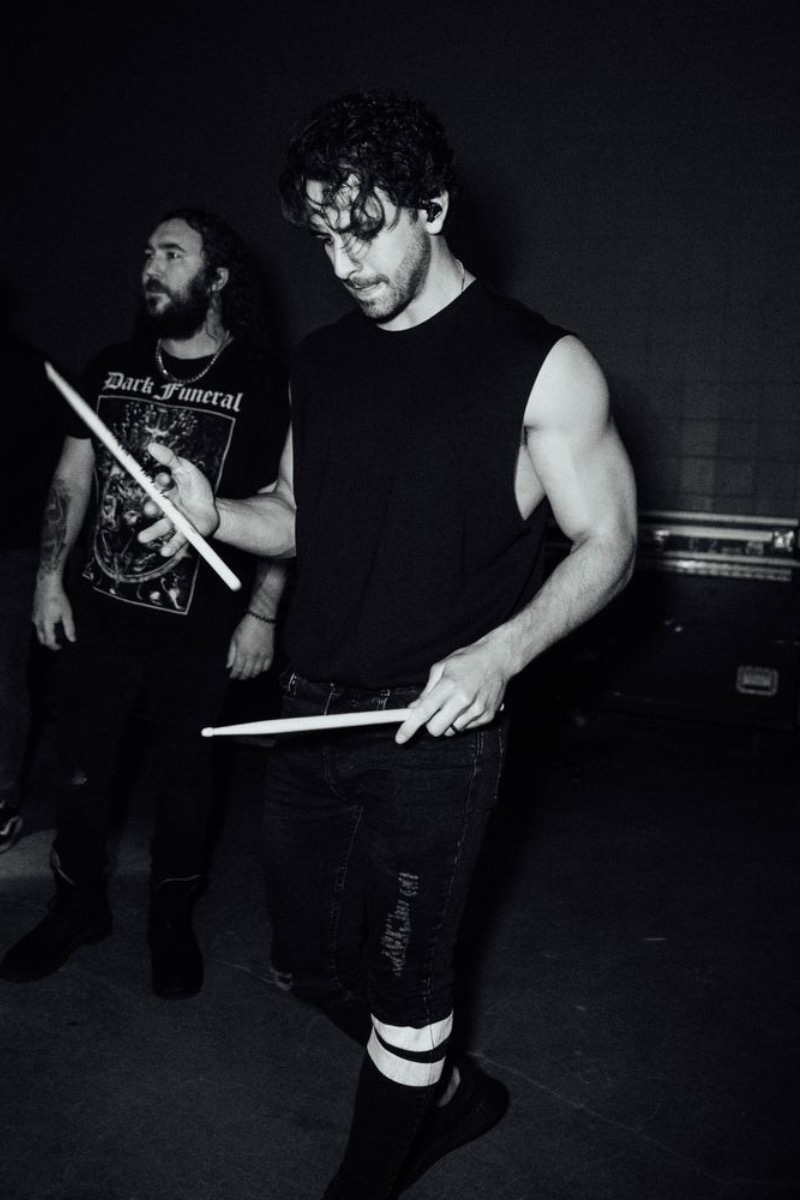
What Is Open-Handed Drumming?
Most drummers set up their kit right-handed by default: the hi-hat sits to the left, the snare sits dead center, and the right hand reaches across the body to play the hi-hat while the left hand plays the snare underneath it. That's crossed-handed playing, and it's what almost every method book and beginner lesson teaches first because it's the fastest way to get someone playing a basic beat.
Open-handed drumming rearranges that relationship. Instead of the right hand crossing over to the hi-hat, the left hand takes over hi-hat duty (or the drummer plays a ride cymbal positioned to the right, letting the right hand stay there) while the right hand is freed up to move around the kit — snare, toms, whatever the groove calls for. The two arms no longer occupy the same physical space, which is really the whole point.
It's worth being clear about what open-handed playing is not: it's not a different grip, and it's not related to whether you use traditional or matched grip. It's purely about which hand covers which part of the kit, and it works the same regardless of how you hold your sticks.
Open-Handed vs. Ambidextrous Playing
These two get confused a lot. Open-handed playing doesn't require you to be ambidextrous or to play every limb combination equally well. Most open-handed drummers still have a dominant hand for fills and accents — they've just removed the crossing motion from their basic groove. You can be firmly right-hand dominant and still play open-handed for most of a song.
Why Drummers Switch to Open-Handed Playing
Open-handed playing isn't just a stylistic choice — it changes what your hands are physically capable of doing at the same time.
- Faster ghost notes. With the right hand out of the way, the left hand has a completely clear path to the snare. Ghost notes, accents, and snare-heavy fills get easier to control because nothing is crossing over the top of the stroke.
- More room for tom fills. A right hand that isn't locked onto the hi-hat can move freely around the toms without needing to lift off the cymbal first. This is a big reason drummers who play a lot of fills gravitate toward open-handed setups.
- Less visual and physical clutter. Crossed arms aren't just awkward to look at — they genuinely limit your range of motion, especially on a kit with toms mounted close to the hi-hat.
- Better for two-handed independence work. If you're working on ghost notes or intricate hi-hat/snare interplay, having each hand in its own lane makes that independence noticeably easier to build.
You'll see this technique from drummers across genres — session players, funk and fusion drummers, and plenty of jazz players who came up learning ride patterns with the right hand and never needed to cross over in the first place. It's less a "style" and more a mechanical fix that happens to suit certain kinds of playing especially well.
The Trade-Offs: What Gets Harder
Open-handed playing isn't a straight upgrade. It solves some problems and creates others, and it's worth knowing both sides before you commit practice time to it.
Left-Hand Hi-Hat Control
If you're right-hand dominant, your left hand almost certainly has less independent control over dynamics and subdivisions on the hi-hat. Sixteenth-note hi-hat patterns that felt automatic with your right hand can feel clumsy with your left until you've logged real practice time.
Crash Cymbal Reach
Most kits are set up with the crash cymbal within easy reach of the right hand. Playing open-handed sometimes means rethinking cymbal placement, or accepting that your right hand has to travel further for certain accents.
Reading Charts and Method Books
Nearly every drum book, video lesson, and chart assumes a crossed-hand setup. You'll need to mentally flip which hand plays which part when following standard instructional material — not difficult, but it's an extra translation step in the beginning.
Step-by-Step: How to Start Playing Open-Handed
You don't need to overhaul your whole technique overnight. This is a gradual process, and rushing it usually means abandoning it a week later out of frustration.
1. Play a Basic Beat Crossed, Then Uncrossed
Start with a simple beat you already know cold — hi-hat on eighth notes, snare on 2 and 4, kick on 1 and 3. Play it the normal crossed way a few times to lock in the tempo, then switch your left hand to the hi-hat and your right hand to the snare. Keep the tempo slow. The goal here isn't speed, it's getting your brain used to the new arrangement.
2. Isolate Each Hand Before Combining Them
Practice your left hand playing steady hi-hat patterns on its own, with no other limb moving. Once that feels stable, isolate your right hand playing the snare backbeat alone. Only combine them once each hand feels confident by itself — trying to combine two shaky parts just doubles the difficulty.
3. Add the Kick Drum Back In
Bring your foot back into the pattern once both hands are comfortable together. This is usually where things fall apart the first few times, because the kick drum timing was locked into muscle memory around the crossed-hand version. Slow the tempo down further if you need to.
4. Practice Transitioning Between Crossed and Open
Real playing rarely stays in one mode the whole song. Practice switching from crossed-handed to open-handed mid-groove, and back again, without losing the beat. This is the skill that actually matters on stage — being able to move fluidly between both setups depending on what a section of a song calls for.
5. Apply It to a Simple Fill
Once the groove feels stable, try a basic fill using your now-free right hand around the toms while your left hand keeps time. This is where open-handed playing starts to show its real advantage — the right hand isn't stuck servicing the hi-hat, so it's free to move.
Grooves to Practice First
Some patterns convert to open-handed playing more easily than others. Start with these before attempting anything more complex.
- Basic rock beat. Hi-hat on eighths, snare on 2 and 4, kick on 1 and 3. The simplest possible test of the new hand arrangement.
- Four-on-the-floor. Kick on every quarter note keeps your foot steady while your hands adjust to the new layout — one less variable to juggle.
- Basic funk groove with ghost notes. Once the open-handed setup feels stable, this is where the payoff becomes obvious. Your snare hand has a completely clear lane for soft ghost strokes between the accents.
- Sixteenth-note hi-hat groove. This is the real test of left-hand control if you're right-hand dominant. Expect it to feel considerably harder than the eighth-note version at first.
Common Mistakes When Learning Open-Handed Drumming
Practicing Only at Slow Tempos and Never Speeding Up
Why it's wrong: Some drummers get comfortable with open-handed playing at a crawl and never push the tempo, which means the technique never actually becomes usable in a real song.
How to fix it: Once a groove feels solid slow, bump the tempo up in small increments with a metronome. Treat it the same way you'd build up speed on any rudiment.
Abandoning It the First Time It Feels Awkward
Why it's wrong: Open-handed playing feels genuinely uncomfortable for the first few sessions, even for experienced drummers. Quitting at that stage means you never get past the part where it actually starts paying off.
How to fix it: Expect a rough week or two. Give it dedicated practice time separate from your regular playing before deciding whether it's for you.
Ignoring Kick Drum Timing While Focused on the Hands
Why it's wrong: Because the hand switch takes so much attention, it's easy to let the kick drum drift out of time without noticing. The groove falls apart even though the hands look fine.
How to fix it: Practice with a metronome and, if possible, record yourself. Listen back specifically for the kick drum's timing rather than trusting how it felt in the moment.
Trying to Force Open-Handed Playing on Every Song
Why it's wrong: Open-handed isn't universally better — it's a tool. Some patterns and fills genuinely work better crossed, and forcing open-handed playing where it doesn't fit just adds difficulty for no benefit.
How to fix it: Learn both and switch based on what a song or fill actually calls for. Plenty of drummers move between crossed and open-handed within the same song without thinking twice about it.
Beginner Tips for Making the Switch Stick
- Practice with a metronome from day one. The new hand arrangement makes it easy to drift off tempo without realizing it. A click keeps you honest.
- Keep a notebook of what felt hard each session. Open-handed playing exposes weaknesses you didn't know you had. Tracking them speeds up the parts that need the most attention.
- Practice away from a full kit sometimes. A practice pad and a hi-hat pedal (or just tapping a surface) let you isolate the hand independence without worrying about the rest of the kit.
- Don't rearrange your whole kit right away. Some drummers reposition cymbals and toms for a fully open-handed setup. Get comfortable with the hand switch on your current kit layout before deciding if a physical rearrangement is worth it.
- Watch drummers who play this way. Seeing the technique in action, especially from different angles, makes the mechanics click faster than reading about them.
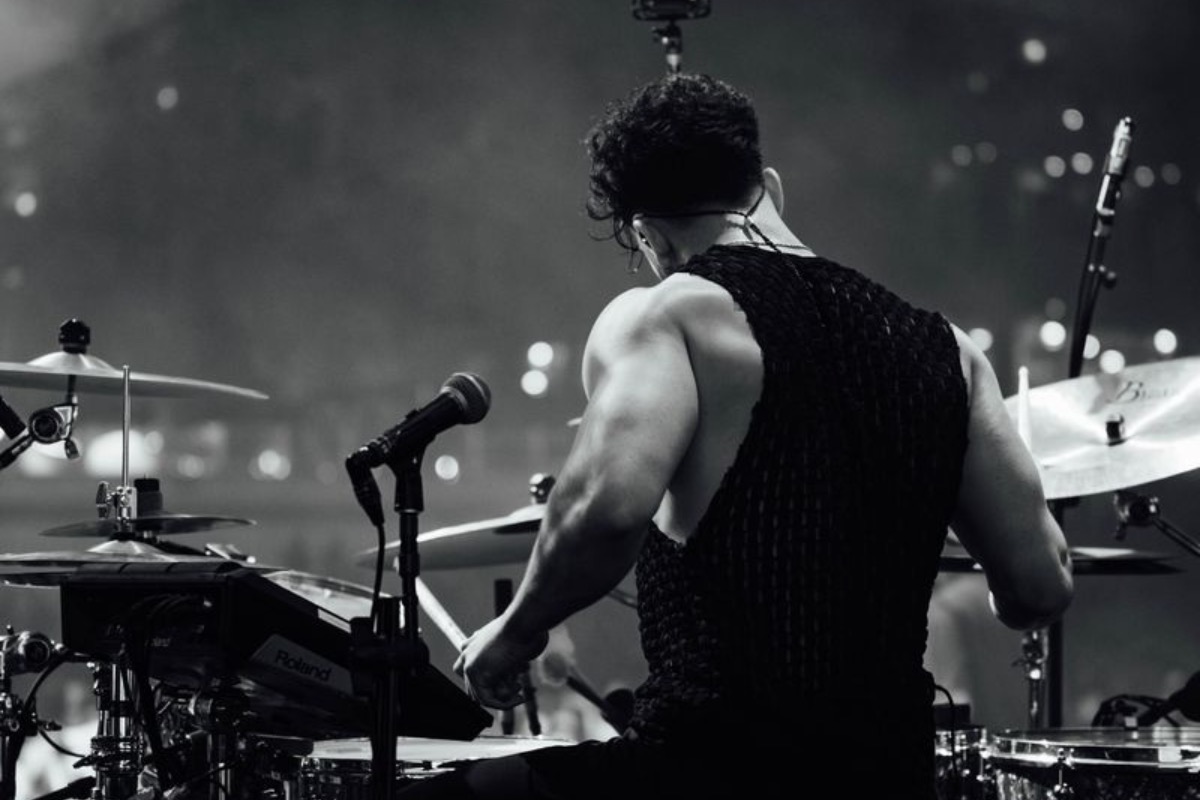
Final Thoughts
Open-handed drumming isn't about looking different behind the kit — it's about giving each hand its own uncontested space so your playing isn't fighting its own arms. It takes real practice time to feel natural, and it won't replace crossed-handed playing entirely for most drummers. But even a partial addition to your toolkit — using it for ghost-note-heavy grooves or fill-heavy sections — can open up parts of your playing that felt physically capped before.
Start slow, isolate each hand, and give yourself permission to feel clumsy for a while. The drummers who make this switch stick are the ones who treat it like any other skill worth building: patiently, with a metronome, and without expecting it to feel natural on day one.
FAQ
Is open-handed drumming better than crossed-handed?
Neither is objectively better — they're different tools. Open-handed playing gives your fill hand more freedom and makes ghost notes easier to control, but it comes with a learning curve, especially for left-hand hi-hat control if you're right-hand dominant.
Do I need to switch permanently to play open-handed?
No. Most drummers who use this technique move between crossed and open-handed depending on the song or the specific fill, rather than committing to one style permanently.
How long does it take to learn open-handed drumming?
Basic grooves can feel workable within a few weeks of regular practice. Getting full independence and speed — especially sixteenth-note hi-hat patterns with your non-dominant hand — can take several months of consistent work.
Do I need to rearrange my drum kit to play open-handed?
Not necessarily. Many drummers start open-handed on a standard kit layout and only adjust cymbal or tom placement later if they decide to commit to the technique long-term.
Can left-handed drummers play open-handed too?
Yes — the concept works the same regardless of which hand is dominant. A left-handed drummer would typically free up the left hand for fills while the right hand covers the hi-hat, mirroring the right-handed version.
Is open-handed drumming only for jazz or fusion players?
No. While it's common among jazz and fusion drummers, it shows up across rock, funk, and pop playing too. Any style that benefits from cleaner ghost notes or freer tom fills can benefit from it.