Drum brushes are a set of wire or nylon bristles fanned out from a handle, used to strike drums and cymbals with a softer, more textured sound than wooden sticks. To use them, you hold them the same way you'd hold a standard pair of sticks, but you have two main techniques at your disposal: tapping (striking the head directly, like a stick) and sweeping (dragging the bristles across the head in a circular or linear motion to create a continuous swishing sound).
That's the short version. The longer story is that brushes are one of the most underrated tools in a drummer's bag — and one of the most misunderstood. Most beginners assume brushes are just for jazz, or just for quiet playing. In reality, they open up a completely different vocabulary of sounds and textures that sticks can't produce at all. Once you know how to use them, you'll find yourself reaching for brushes in acoustic sessions, recordings, low-volume gigs, and any situation where you want warmth and nuance over attack and volume.
In this guide, we'll cover the different types of drum brushes, how to hold and use them, the core brush techniques every drummer should know, how to play basic patterns with brushes, the most common beginner mistakes, and how to choose the right pair. By the end you'll understand not just what brushes are, but when and how to actually use them in real playing situations.
When you’re done reading, you will be familiar with:
- Types of Drum Brushes
- Brushes vs. Sticks: When to Use Each
- How to Hold Drum Brushes
- Core Brush Techniques
- Basic Brush Patterns to Practice
- Common Brush Mistakes
- Beginner Tips for Playing with Brushes
- How to Choose Drum Brushes
- Final Thoughts
- FAQ
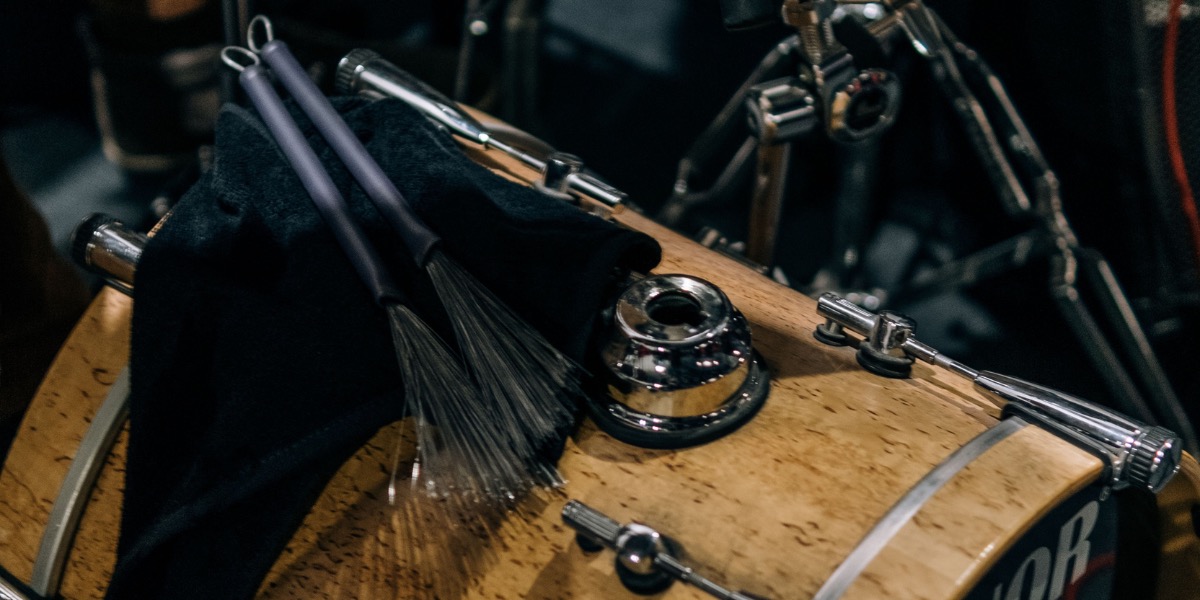
Types of Drum Brushes
Before picking up a pair of brushes, it helps to know what you're choosing between. Not all brushes are built the same, and the material and spread of the bristles have a direct impact on tone, volume, and feel.
Wire Brushes
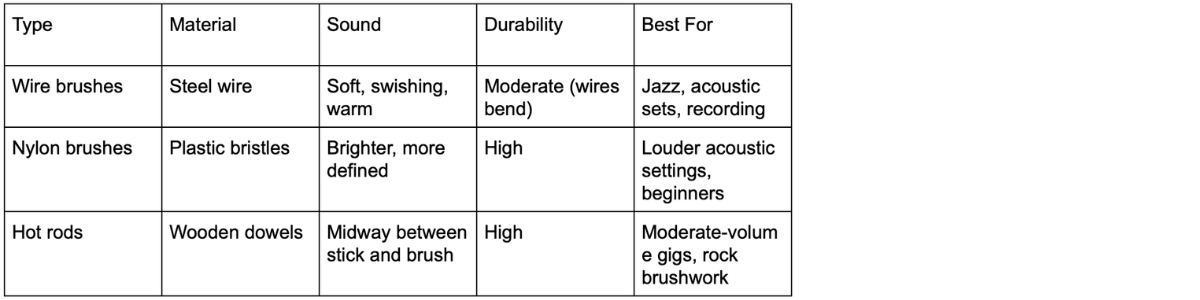
Wire brushes are the most common type. The bristles are thin strands of steel wire fanned out from the end of a handle, and when dragged across a coated drumhead, they produce the classic swishing, sizzling sound associated with jazz and acoustic music. Wire brushes are sensitive — they respond to subtle pressure changes, which gives you a wide dynamic range from barely-there whispers to full-volume taps. The trade-off is durability. Wires bend and break over time, especially if you're playing aggressively or on rough surfaces. Most wire brushes are retractable, meaning you can pull the bristles back into the handle for transport and fan them out to your preferred spread when playing.
Nylon Brushes
Nylon brushes use plastic bristles instead of steel wire. They're more durable and produce a slightly brighter, more focused sound than wire brushes. The sweep isn't quite as silky, but the tap is more defined, which makes nylon brushes a reasonable choice for drummers who want brush textures in louder settings or who keep breaking wire brushes. Some drummers find nylon brushes easier to control for beginners because the bristles are stiffer and less prone to going wild under pressure.
Hot Rods and Brush Alternatives
Technically not brushes, but worth knowing: hot rods (or "rutes") are bundles of thin wooden dowels bound together. They sit somewhere between brushes and sticks in terms of volume and attack — quieter than a regular stick, louder than a wire brush, with more snap and less sweep. If you need something with more bite than brushes but less volume than sticks, hot rods fill that gap. Many drummers carry all three options.
Brushes vs. Sticks: When to Use Each
The decision between brushes and sticks isn't about volume alone — it's about what sound the music is asking for. Knowing when to make the switch is part of what separates a well-rounded drummer from one who only has one sound.
Reach for brushes when:
- The music is quiet or acoustic. A singer-songwriter performing in a small room, a jazz trio in a restaurant, a late-night recording session — brushes let you contribute groove without overwhelming the other instruments.
- The feel calls for warmth over punch. Brushes roll under a melody rather than punching through it. When the music needs texture rather than attack, brushes are the right call.
- You're playing a ballad or slow jazz standard. The swishing sweep of a brush on a snare is practically a defining sound of slow jazz. Sticks in those contexts often sound intrusive.
- You need dynamic contrast mid-performance. Switching from sticks to brushes mid-song is a powerful musical move — the shift in texture communicates a mood change as clearly as a key change does.
Stick with regular sticks when:
-
You need volume and projection in a loud band context
-
The music needs sharp attack and defined rimshots or accents
-
You're playing fast, technical patterns where brush bristle spread would make precision difficult
Most working drummers carry both. The kit sound changes completely when you swap between them, and having that option available in real-time is a genuine musical tool.
How to Hold Drum Brushes
The grip for brushes is essentially the same as for sticks — matched grip (both hands hold the brush the same way, with the handle resting in the V between thumb and index finger, other fingers curled loosely around the shaft) or traditional grip (left hand pronated, with the brush handle resting between the index and middle fingers). Most drummers use matched grip for brushes, since traditional grip is often associated with jazz but isn't required for brush playing.
The main difference from sticks is that brush playing relies much more on the full arm and wrist, especially for sweeping motions. You're not just hinging from the wrist — you're drawing arcs across the head with your forearm guiding the motion. Hold the brushes loosely enough that the bristles can fan and splay as they drag. A death-grip on the handle tightens the bristles and kills the sweep sound.
One practical adjustment: when you fan the bristles out, find a spread that gives you the right surface contact for the head you're playing on. A 14-inch snare with a coated head responds beautifully with a moderate fan. Too wide a spread and the bristles skip across the surface; too narrow and you lose the texture of the sweep.
Core Brush Techniques
There are two fundamental techniques for brush playing, and everything else builds from them. Get these solid before you move on to more complex patterns.
Tapping
Tapping with brushes is the closest thing to playing with sticks. You strike the head with the bundle of bristles rather than dragging them. The sound is softer and more diffuse than a stick — no sharp transient attack, just a muted thud with a bit of bristle texture. Use tapping for snare backbeats, accents, and anywhere you'd normally hit with a stick but need less volume. On cymbals, tapping with brushes produces a drier, less bright sound than sticks, useful for hi-hat patterns in very quiet contexts.
Sweeping (Circular Sweep)
The sweep is the defining brush technique. With the bristles fanned out against a coated snare head, you move the brush in a continuous oval or circular path — counterclockwise with the right hand, clockwise with the left (or vice versa depending on your grip). The bristles drag across the coating and produce that characteristic sustained "shhhh" sound that sits under a melody like a cushion of air.
The key to a good sweep is consistent pressure and a smooth, unhurried motion. Too much pressure and the bristles drag harshly; too little and they skip. Finding the right weight takes a bit of experimentation. I usually start with a medium-light arm weight and adjust once I can hear the sound clearly.
The sweep is also where coated heads matter. A clear drumhead produces almost no sweep sound because there's nothing for the bristles to catch on. If you plan to use brushes regularly, make sure your snare has a coated batter head — it makes a dramatic difference. When choosing or replacing your heads, the coating question is one of the first things to sort out.
Linear Sweep
A variation of the circular sweep, the linear sweep moves the brush back and forth in a straight line rather than an oval. It's commonly used in jazz for a more angular, rhythmically defined texture. Some drummers use the left hand for a circular sweep (to maintain a sustained background sound) while the right hand taps out the rhythm — that two-hand coordination is one of the hallmarks of jazz brush playing.
Basic Brush Patterns to Practice
These are the starting points. Once you can play each cleanly, you can start combining and varying them to build your own brush vocabulary.
The Basic Jazz Brush Beat
This is the foundational brush pattern in jazz. The left hand maintains a continuous oval sweep on the snare head, keeping a sustained texture throughout. The right hand taps the hi-hat on beats 2 and 4 (or rides a pattern on the ride cymbal). The left foot closes the hi-hat on beats 2 and 4 for the "chick" that defines the jazz feel. The bass drum plays softly, "feathering" a note on all four beats or just on 1 and 3 depending on the tempo and feel.
Start slow — this pattern requires your four limbs to do different things simultaneously, which takes time to coordinate. Getting the circular left-hand sweep even and continuous while your right hand taps a rhythm is the initial challenge. Most beginners find the left hand wants to stop sweeping when the right hand does something complex. That's normal; it's a coordination issue that clears up with slow, patient repetition.
Brushes on Ballad
On a slow ballad, the sweep gets bigger and slower, the taps softer. Both hands can sweep in mirrored oval patterns, punctuated by soft backbeat taps on beats 2 and 4. The overall texture becomes lush and cushioned, almost orchestral in feel. This is where brushes sound completely unlike anything you can achieve with sticks.
Brush Sweep with Tap Accents
A great exercise: maintain the sweep with your non-dominant hand, and use your dominant hand to tap quarter notes, eighth notes, or a simple rhythm on the snare. This trains the independence that underlies good brush playing. Once the hands are comfortable with this pattern, bring in the feet on the hi-hat and bass drum.
Common Brush Mistakes
A few habits trip up almost every drummer new to brushes. Spotting them early saves you a lot of frustration.
Using a Clear Head Instead of a Coated Head
Why it's wrong: A clear head gives you almost no sweep sound. The bristles skim across the surface without catching, and the whole textural quality of brush playing disappears. You end up with a soft tap sound and none of the swishing texture that makes brushes worth using.
How to fix it: Use a coated drumhead for any snare drum you intend to play with brushes regularly. The coating is what the bristles catch on to produce the sweep sound. It's a non-negotiable if you want brush playing to sound right.
Gripping the Handle Too Tight
Why it's wrong: A tight grip bunches the bristles together, narrowing the fan and killing the sweep texture. You lose the airy, spread sound and end up with something more like a thin stick hit. It also makes sweeping motions stiff and uneven.
How to fix it: Hold the brush loosely — fingers curled around the handle with just enough grip to control the direction of motion. The bristles should splay freely. If your hand is tired after a few minutes of brush playing, you're gripping too hard.
Stopping the Sweep When Playing Accents
Why it's wrong: Beginners often unconsciously halt the sweep hand when the accent hand does something rhythmically demanding. This creates gaps in the sustained texture — the "shhhh" stops and starts rather than flowing continuously.
How to fix it: Separate the motions deliberately in practice. Set a metronome, sweep the left hand at a steady pace, and tap only with the right. Start with the simplest possible right-hand rhythm (quarter notes) before adding complexity. The sweep hand needs to become automatic before you can use both hands expressively.
Playing Brushes the Same Way as Sticks
Why it's wrong: Brushes aren't quiet sticks. Treating them that way — just tapping, no sweeping — loses most of what makes brush playing interesting. You end up with a muffled version of stick playing rather than a genuinely different sound.
How to fix it: Commit to learning the sweep. It's a different physical motion from stick playing, and it feels awkward at first. Give it dedicated practice time — even 10 minutes of sweep exercises per session will build the technique faster than just using brushes occasionally in general playing.
Playing Too Loud
Why it's wrong: Brushes are a low-volume tool. If you're attacking them hard enough to project over a loud band, you're using the wrong tool for the situation. Heavy brush strokes also flatten the bristles and reduce sweep quality.
How to fix it: If the music is too loud for brushes to work, that's a sign to use hot rods or sticks. Brushes are best in acoustic and low-volume contexts. Trust the context, not the force.
Beginner Tips for Playing with Brushes
- Practice the sweep on a practice pad first — but use a coated one. Some practice pads have a textured rubber surface that mimics a coated head well enough to build the sweep motion. A smooth rubber pad won't give you the right feedback.
- Listen to recorded jazz drummers who use brushes. Philly Joe Jones, Ed Thigpen, Connie Kay, Elvin Jones — listen and watch how the motion flows. Brush playing has a visual quality (the sweeping arc is visible) that helps you understand the technique before you've fully internalized it.
- Start with a ballad tempo. At slow tempos, you have time to think about the sweep, feel the right pressure, and hear the sound clearly. Fast tempos compress everything and make it hard to hear what's going wrong.
- Fan your bristles to about two-thirds of the head diameter. This is a reasonable starting spread for most 14-inch snare drums. Adjust from there based on the sound you're getting.
- Don't neglect brushes on cymbals. The hi-hat and ride respond interestingly to brushes — the sound is softer and more diffuse than with sticks, which works well in quiet contexts. Experiment with where on the cymbal you tap and how that changes the tone.
- Check your snare wire tension. Loose snare wires can sound great with brushes, adding a subtle buzz to even soft sweeps. A well-tuned snare responds to brushes the same way it responds to sticks — the better the tuning, the better the brush sound. Knowing how to tune your snare drum properly makes every playing technique more effective.
How to Choose Drum Brushes
For beginners, the main decision is wire vs. nylon. Wire brushes are the traditional choice and produce the most characteristic sweep sound — if you're playing any amount of jazz or acoustic music, start with wire. Nylon brushes are more forgiving and last longer if you're rough on equipment.
Within wire brushes, look for:
- Retractable bristles. Almost all quality wire brushes are retractable. This protects the wires in transit and lets you adjust the spread.
- Comfortable handle. You'll be sweeping for extended periods — a rubberized or contoured handle reduces fatigue.
- Wire gauge. Thinner wires are more sensitive and produce a silkier sweep; thicker wires are more durable and louder. Most general-purpose brushes fall in the middle.
Reliable brands to look at: Vic Firth (Heritage, SD2 Brush), Promark (BPW), Regal Tip (various), and Innovative Percussion. You don't need to spend a lot to get a functional pair — a mid-range wire brush at $20–$30 is perfectly usable for learning.
Final Thoughts
Drum brushes reward patience. The first time you drag a pair of wire brushes across a coated snare head and hear that warm, swishing sweep, something clicks — you understand immediately why brushes have their own sound vocabulary that sticks simply can't replicate. The technique takes a bit of work to build, especially the circular sweep and the two-hand independence it requires, but the investment pays off fast. Add brushes to your bag, find a coated head for your snare, put on some Philly Joe Jones or Ed Thigpen, and start slow. The rest builds from there.
FAQ
Are drum brushes only for jazz?
No. Brushes are associated with jazz because of the genre's low-volume, texture-forward approach, but they're used in country, folk, acoustic pop, singer-songwriter settings, and quiet recording sessions across many genres. If the music is acoustic or low-volume, brushes are worth considering regardless of the style.
Can I use drum brushes on any drum head?
You can tap with brushes on any head, but for the sweeping technique, you need a coated head. The coating provides the texture the bristles catch on to create the sustained swishing sound. A clear head produces almost no sweep, just a soft tap.
Do I need to tune my snare differently for brushes?
Not necessarily — a well-tuned snare sounds good with both sticks and brushes. That said, some drummers slightly loosen the snare wires when playing with brushes to get a more open, warmer buzz on swept strokes. It's worth experimenting, but a standard tuning works as your starting point.
How long do wire drum brushes last?
With regular use, wire brushes typically last a few months to a year. The wires bend and eventually break, especially if you play aggressively or hit the rim accidentally. Nylon brushes last longer. Store brushes with the wires retracted to extend their life.
Can beginners learn brush technique on their own?
Yes, though it takes patience. The circular sweep is a new physical motion that feels awkward at first, and the limb independence required for jazz brush playing takes consistent practice to build. Start with the sweep exercise alone, then layer in the accent hand, then the feet. Video resources and recordings of brush drummers are your best learning tools alongside deliberate practice.
What's the difference between wire brushes and hot rods?
Wire brushes produce a soft, sweeping, textured sound best suited to quiet contexts. Hot rods (bundles of wooden dowels) are louder, have more attack, and don't sweep — they sit between a brush and a stick in volume and feel. Hot rods are the right tool when you need more volume than brushes can produce but less than sticks.