The main types of drumsticks are standard wood-tip sticks, nylon-tip sticks, brushes, hot rods (bundled sticks), and mallets — each designed for a different sound, playing style, and musical context. Within the standard stick category alone, size, wood species, taper, and tip shape all combine to create dozens of distinct options that affect feel and tone more than most beginners expect.
Most drummers pick up whatever sticks came with their kit, play them until they break, then grab the same pair again — without ever realizing how much the choice of stick is shaping their sound. The stick is literally the point where your body meets the instrument. Getting it right matters.
In this guide we'll cover every part of a drumstick and what it does, the three main wood species and how they feel, the size numbering system (and what 5A actually means), every major tip shape and how each one affects cymbal tone, the difference between wood and nylon tips, and every specialty stick type you're likely to encounter. We'll also walk through the most common stick-selection mistakes and how to match a stick to your playing style. By the end, you'll know exactly what to look for the next time you're standing in front of a rack of sticks at the drum shop.
When you’re done reading, you will be familiar with:
- The Anatomy of a Drumstick
- Drumstick Materials: Hickory, Maple, and Oak
- Drumstick Sizes Explained
- Tip Shapes and What They Do to Your Sound
- Wood Tips vs. Nylon Tips
- Specialty Sticks: Brushes, Hot Rods, and Mallets
- How to Choose the Right Drumstick for Your Style
- Common Drumstick Mistakes (and How to Fix Them)
- Tips for Beginners
- Final Thoughts
- FAQ

The Anatomy of a Drumstick
Before you can make sense of why two sticks that look nearly identical feel completely different, it helps to know the parts of the stick and what each one does. Most players just think of a stick as a long piece of wood — but there's actually a lot going on from butt to tip.
- Tip: The very end that strikes the drum or cymbal. Tip shape and material have the single biggest effect on cymbal tone. More on this in its own section below.
- Shoulder (or neck): The narrow section just behind the tip. This is where the stick crosses the edge of a cymbal for crash hits and where the stick flexes most. A longer, more tapered shoulder gives more flex and a softer feel; a shorter, thicker shoulder transfers more force.
- Taper: The gradual narrowing from the body down to the shoulder. A long taper means more flex and a lighter feel. A short (or "quick") taper means a stiffer stick with faster rebound — great for precision but less forgiving on the hands during long sessions.
- Body (or shaft): The main length of the stick where you grip it. Diameter here is what determines how the stick feels in your hand. A thicker body means more mass and more volume potential; a thinner body is easier to hold for extended periods.
- Butt: The blunt end opposite the tip. Some players flip the stick and play on the butt end for extra volume and attack, especially on rim shots and crashes. A few stick designs are specifically built with a shaped butt for this technique.
Drumstick Materials: Hickory, Maple, and Oak
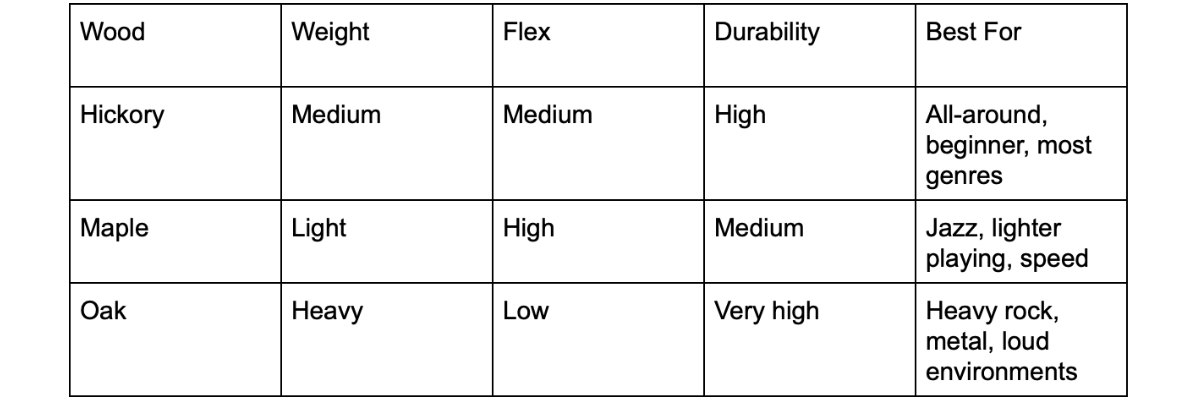
The vast majority of drumsticks are made from one of three woods: hickory, maple, or oak. Each has a different density, flexibility, and feel, and the differences are real enough that experienced players can feel them immediately.
Hickory
Hickory is the industry standard — around 80% of all drumsticks sold worldwide are hickory. It hits the sweet spot between weight, flex, and durability. Hickory has a slight flexibility that helps absorb shock, which means less fatigue in your wrists and hands during long sessions. It's dense enough to hold up to hard playing, but not so heavy that it slows you down. If you're picking up your first pair of non-bundled sticks and you're not sure what to get, hickory is almost certainly the right answer.
Maple
Maple is lighter and less dense than hickory, which makes it faster and more responsive — useful for players who want to move quickly and play at lower volumes without sacrificing control. Jazz and orchestral drummers often reach for maple because of the lighter feel and the way it responds on brushed or lighter cymbal work. The trade-off is durability: maple sticks break more easily than hickory under heavy playing. If you regularly dig into rim shots and play at high volumes, maple might not be the most economical choice.
Oak
Oak is denser and heavier than hickory, which means more volume, more power, and longer durability. It doesn't flex as much as hickory, so the feel is stiffer — you'll notice more vibration transmitted back into your hands. Oak sticks are a common choice for heavy rock and metal players who need sticks that can take repeated abuse without snapping. The extra mass also means you don't have to swing as hard to get volume, which can actually be easier on your technique in loud environments.
Drumstick Sizes Explained
Drumstick sizing uses a numbering and lettering system that looks confusing at first but makes sense once you know the logic. The number refers to the circumference of the stick — lower numbers mean thicker, heavier sticks; higher numbers mean thinner, lighter sticks. The letter originally referred to the intended application: "A" stood for orchestra, "B" for band, and "S" for street (marching). In practice today, these letter designations have mostly lost their original meaning and are used loosely across different manufacturers.
The most common sizes you'll encounter:
- 7A: The thinnest and lightest of the common sizes. Fast and easy on the hands, preferred for jazz, acoustic, and low-volume playing. Not ideal for heavy rock — they can feel too flimsy and break faster under hard hitting.
- 5A: The industry standard. Balanced weight, comfortable diameter, versatile across virtually every genre. This is the stick most beginners are recommended to start with, and a huge percentage of professional players never feel the need to go elsewhere. I'd always start here unless you have a specific reason not to.
- 5B: Slightly thicker and heavier than the 5A. The same length, but more mass in the hand — louder and with more attack. Popular with rock drummers who want a bit more beef without jumping to the 2B.
- 2B: The heaviest common size. Thick, heavy, and powerful — built for loud, forceful playing. Common in rock and metal contexts. Can be fatiguing during long sessions if your technique isn't solid, because the extra mass amplifies any tension in your grip.
Tip Shapes and What They Do to Your Sound
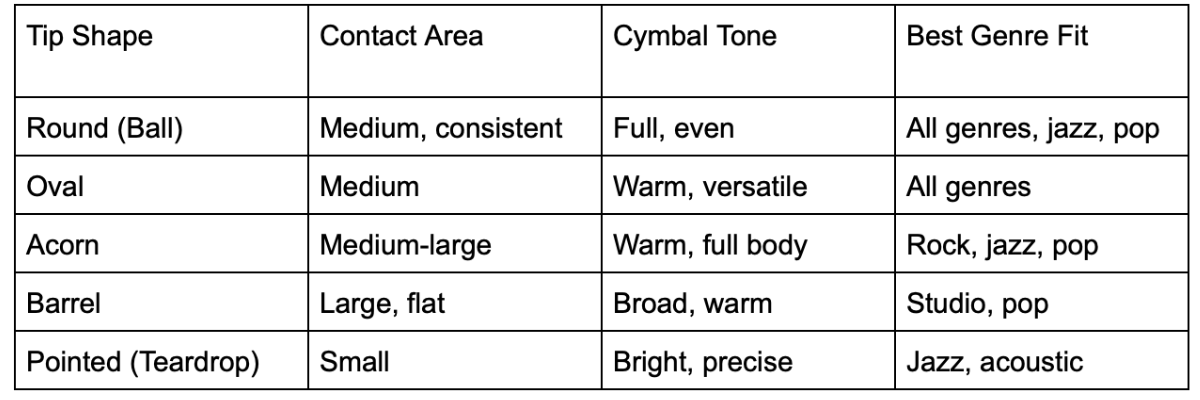
Tip shape is the most underrated variable in stick selection, especially for cymbal players. The contact area between the tip and the cymbal determines the tone you get — a larger contact area produces a fuller, more spread sound; a smaller, more pointed contact area produces a brighter, more focused sound. Here are the main shapes:
Round (Ball)
The round tip produces the most consistent cymbal tone because the contact area is the same no matter how the stick rotates in your hand. It gives a full, even sound across the cymbal and is a popular choice for jazz, pop, and general-purpose playing. Easy to work with and very forgiving.
Oval
A slight flattening of the round tip. Produces a slightly warmer, fuller tone than a pure ball tip. Very versatile — works well on both drums and cymbals and is one of the most common tip shapes across all genres.
Acorn
Wider at the base of the tip and narrowing slightly toward the top. The larger surface area creates a warm, full sound with plenty of body. The acorn is particularly well-suited to ride cymbals, where you want a defined ping without brightness becoming thin or harsh.
Barrel
A flat, cylindrical tip with a larger surface area than most other shapes. Produces a broad, warm tone — fat rather than defined. Common in situations where you want a lot of body from the cymbal without a cutting attack.
Pointed (Teardrop)
A narrow, tapered tip that produces a bright, precise ping on cymbals. Common in jazz contexts where articulation and note definition matter. The flip side is that it can sound thin on crashes and isn't ideal for heavy rock, where you want more spread from your cymbals.
Wood Tips vs. Nylon Tips
Beyond shape, tips come in two materials: wood and nylon. The difference is most pronounced on cymbals — on drums, the two are largely interchangeable.
Wood tips produce a warmer, more natural tone on cymbals. They feel organic and are preferred by most jazz and acoustic players for the way they interact with the cymbal's natural sustain. The downside is wear: wood tips chip over time, especially on rough cymbal surfaces, and a chipped tip changes the sound. I keep a close eye on wood tips and replace sticks when the tip starts to look ragged — a chipped tip sounds noticeably worse on ride cymbals.
Nylon tips are harder and more consistent than wood, producing a brighter, more cutting ping on cymbals — especially rides. Because nylon doesn't wear the same way wood does, the tone stays consistent longer. They're a popular choice in pop and rock settings where a bright, defined cymbal sound is desirable. The one risk with nylon tips is delamination — the nylon cap can pop off the stick body after extended use, which is both noisy and temporarily dangerous. It's rarer with quality sticks but worth being aware of.
Specialty Sticks: Brushes, Hot Rods, and Mallets
Standard sticks are the default, but there's a whole family of specialty implements that dramatically change the sound and character of the kit. Every drummer should at least know what these are, even if they mostly play with standard sticks.
Wire Brushes
Wire brushes replace the stick tip with a fan of thin metal wires. When swept across a snare head or cymbal, they produce a soft, hissing whisper sound that's central to jazz, bossa nova, and acoustic music. Brushes can also be used for light tapping (for a quieter version of standard stick articulation) or swirled in circles on the snare head to create a sustained, shimmering wash. Learning brush technique is a whole discipline of its own — if you're curious about jazz drumming or want to play in acoustic settings, brushes are an essential tool to have.
Hot Rods and Bundled Sticks
Hot rods (also called rods, multi-rods, or bundled sticks) consist of multiple thin wooden or composite dowels bound together. They hit somewhere between a brush and a standard stick in terms of volume and attack — quieter than sticks, louder than brushes, with a softer tone and less cymbal spread. They're widely used in acoustic sessions, smaller venues, and any context where the full volume of sticks would overpower the other instruments. Several manufacturers make variations with different numbers and diameters of dowels, ranging from very soft and brush-like to nearly as loud as a regular stick.
Mallets and Felt Beaters
Mallets are stick-length implements with a padded or felt head rather than a wood or nylon tip. They're used primarily on timpani and concert percussion in orchestral settings, but also appear in drum kit playing for specific effects — most notably rolling on cymbals to create a sustained, swelling wash, or playing soft passages on toms where a mallet's pad produces a warm, rounded tone rather than a stick's attack. Some progressive and experimental drummers use mallets as a core part of their palette alongside standard sticks.
Specialty and Hybrid Options
Beyond these main categories, you'll find: Timbale sticks (thin, light, unfinished sticks for the bright attack of Latin percussion), bamboo sticks (lighter than maple, with a distinctive bright tone and faster breakdown), telescoping sticks (adjustable length for transport or custom feel), and reversible sticks with shaped butts designed to be flipped for a heavier or lighter sound. Most of these are niche tools, but it's useful to know they exist.
How to Choose the Right Drumstick for Your Style
With all of that in mind, here's a practical framework for narrowing down what you actually need:
- Beginner / not sure yet: Hickory 5A with a round or oval tip. This is the correct starting point for the vast majority of new players. Get comfortable with a neutral stick before you start chasing specific tones.
- Rock and pop: Hickory or oak 5A, 5B, or 2B with a round or acorn tip. Heavier sticks handle the volume demands; acorn tips give you a full ride sound.
- Jazz and acoustic: Maple 7A or 5A with a pointed or oval wood tip. Lighter feel, faster response, warmer cymbal tone. Brushes are also essential in this context — knowing how to hold drumsticks correctly matters especially for brush technique, where grip affects the sweep angle.
- Metal and heavy genres: Oak 5B or 2B, nylon tip for bright cymbal definition. Oak handles the abuse; nylon tips cut through dense mixes.
- Low-volume / practice: Hot rods or bundled sticks. If you're playing acoustic sessions or practicing somewhere with noise restrictions, rods let you maintain feel and rhythm without the full volume of sticks.
- Studio work: Match the stick to the song. Studio drumming often means swapping sticks mid-session — brushes for the verse, standard 5A for the chorus, mallets for a fill. Having a variety on hand is part of being a session drummer.

Common Drumstick Mistakes (and How to Fix Them)
Stick selection seems simple but there are a few consistent errors that hold drummers back — especially in the early stages. Here's what to watch for.
Grabbing the Biggest, Heaviest Stick Because It Feels Powerful
Why it's wrong: Heavier sticks require more force to move and create more rebound energy at impact. For a beginner, this usually means tension — in the grip, the wrists, the forearms. Tension kills speed, control, and eventually leads to injury. A 2B might feel powerful, but if you're gripping it tightly to control the rebound, you're fighting the stick rather than playing with it.
How to fix it: Start with a 5A and work on letting the stick do the work. Volume in drumming comes from technique — specifically from using the rebound rather than forcing every stroke. Once your grip is relaxed and your rebound is controlled, you can experiment with heavier sticks if you genuinely need the extra mass.
Ignoring Tip Shape When Buying Cymbals
Why it's wrong: Most beginners pick sticks based on feel in the hand and pay no attention to the tip. But tip shape is what determines how your ride cymbal sounds — the difference between a round tip and a pointed tip on the same cymbal can be dramatic. If your ride sounds thin and icy, the tip might be the culprit before the cymbal is.
How to fix it: When you're testing sticks, always bring them to a cymbal and play a ride pattern. Listen for whether the ping is full and warm or thin and bright, and choose accordingly. An acorn or round tip on a mid-weight cymbal is a good starting point for a warm, musical ride tone.
Playing with Matched Sticks of Mismatched Weight
Why it's wrong: Drumsticks are natural wood products, and no two sticks weigh exactly the same. Even within the same box, there's some variation. Playing with a light stick in one hand and a heavy stick in the other means your strokes will never balance — one hand will always hit louder than the other at the same effort level, making evenness between your hands harder to develop.
How to fix it: Roll each stick on a flat surface (a drum head works perfectly) before buying. Any wobble or roll deviation means the stick isn't perfectly straight. Weigh pairs against each other by balancing them on a finger — a matched pair should feel nearly identical. Most drum shops won't mind you doing this, and some stick brands sell pre-matched pairs.
Never Experimenting Beyond the Default Stick
Why it's wrong: Most drummers pick a stick early on and stick with it forever — often by accident, just because that's what they started with. This means they never discover that a slightly different size or material might make them more comfortable, faster, or better-sounding in their primary genre.
How to fix it: Every few months, try a pair that's different from what you normally play. If you always play 5A hickory, try a maple 5A for a week, or a hickory 5B. The comparison will tell you things about your own playing that you can't learn any other way.
Tips for Beginners
- Start with a 5A. It's not a compromise — it's the most versatile stick made. The overwhelming majority of professional drummers across every genre use a 5A or something very close to it. You can always adjust once you know what you're adjusting from.
- Buy hickory first. Before you start experimenting with maple and oak, understand what the baseline feels like. Hickory is the neutral reference point everything else is compared to.
- Replace sticks before they completely break. Playing with a cracked, splintered, or heavily chipped stick is both a sound problem and a safety one. Splinters and shards do fly. I usually retire a stick when I can feel a crack starting rather than waiting for it to snap mid-song.
- Match your grip to your stick weight. The way you hold your sticks — matched grip, traditional grip, how loose your fingers are — interacts with stick weight. A heavier stick rewards a looser grip; fighting it with tension defeats the purpose. Revisiting proper stick grip after changing stick sizes is always worthwhile.
- Keep brushes in the bag. Even if you never play jazz, having a pair of wire brushes is useful. They're invaluable for quiet practice and for playing along with acoustic instruments or low-volume recordings.
- Try before you buy when possible. If there's a drum shop near you, play the sticks on a practice pad or demo kit before committing. Stick feel is personal, and reading about it only gets you so far.
Final Thoughts
The drumstick is the simplest piece of equipment in your setup and the one with the most direct physical connection to your playing. Getting the right stick doesn't make you a better drummer overnight, but playing with a stick that's too heavy, too light, or badly shaped for your cymbal setup creates friction between your intention and the result — and that friction adds up over thousands of strokes.
Start with hickory 5A if you don't have a strong reason to do otherwise. Pay attention to how tip shape affects your cymbal tone. Keep experimenting as you develop. And don't underestimate specialty sticks — brushes and hot rods aren't just for jazz players; they're practical tools that expand what you can do with the kit you already have.
Once you've got your stick sorted, the next step is making sure your playing technique is getting the most out of it — starting with the fundamentals of your first beginner drum beats and building from there.
FAQ
What is the most common drumstick size?
The 5A is the most widely used drumstick size in the world. It's balanced, versatile, and appropriate for virtually every genre and playing level. Most professional drummers use a 5A or something very close to it in weight and diameter.
What's the difference between 5A and 5B drumsticks?
A 5B is the same length as a 5A but thicker in diameter, making it slightly heavier with more mass behind each stroke. The 5A is lighter and faster; the 5B is louder and more forceful. Both are excellent all-around sticks — the 5B is popular with rock drummers who want a bit more power without going all the way to a 2B.
Are nylon tips better than wood tips?
Neither is objectively better — they're different tools. Nylon tips are brighter and more consistent (they don't wear the same way wood does), which works well in rock and pop contexts. Wood tips are warmer and more organic, which is preferred for jazz and acoustic playing. The right choice depends on the sound you're going for.
What drumsticks should a beginner use?
A hickory 5A with a round or oval tip is the standard recommendation for beginners. It's the most versatile option available and gives you a neutral baseline to understand how stick size and material affect your playing before you start experimenting.
What are hot rods / multi-rods?
Hot rods (also called multi-rods or bundled sticks) are multiple thin dowels bound together to form a single implement. They hit between a brush and a standard stick in volume — quieter and softer than regular sticks, louder than wire brushes. They're widely used for acoustic sessions, smaller venues, and situations where full stick volume would overpower the room.
Do drumsticks affect sound?
Yes, significantly — especially on cymbals. Tip shape, tip material (wood vs. nylon), and overall stick weight all affect the tone you get from drums and cymbals. The same kit played with a pointed wood-tip 7A vs. an acorn nylon-tip 5B will sound noticeably different, particularly on the ride cymbal.
How often should I replace drumsticks?
Replace sticks when you notice cracking, deep gouging, or tip damage — don't wait for them to snap. Cracked sticks are a safety hazard and a sound problem. Heavy players may go through a pair every few weeks; lighter players can get months out of a pair. Inspecting your sticks at the start of each practice session is a good habit to build.
What drumsticks do professional drummers use?
It varies enormously, but hickory 5A sticks — or close variations of that size in a player's preferred wood and tip — are by far the most common. Many signature sticks from major manufacturers are essentially slight modifications of the 5A: a bit longer here, a slightly different taper there. The 5A is the baseline the industry keeps returning to.