The main types of drums are the acoustic drum kit, the electronic drum kit, hand drums (like the djembe, conga, bongo, and cajon), frame drums (like the tambourine and bodhran), and orchestral percussion instruments like the timpani — each built for a different musical context, playing style, and sound. Knowing the difference matters whether you're figuring out what to buy, what to learn, or simply trying to understand what you're hearing in a piece of music.
Most beginners assume "drums" means one thing — the kit behind a rock band. In reality, drums are among the most diverse instruments in the world, present in virtually every musical culture in human history. The djembe, the tabla, the cajon, and the timpani are all "drums," but they have almost nothing in common beyond the basic idea of striking a surface to make rhythm. Knowing which type is which makes you a more informed player and a better listener.
In this guide, we'll walk through every major drum category — what it looks and sounds like, how it's played, and where you'll hear it. We'll also cover the most common mistakes beginners make when choosing a drum type, and give you a practical framework for deciding which one is actually right for you. By the end, no drum you encounter will be a mystery.
When you’re done reading, you will be familiar with:
- The Acoustic Drum Kit
- Individual Acoustic Drums
- Electronic Drum Kits
- Hand Drums
- Frame Drums
- Orchestral and Concert Drums
- World Percussion
- All Types at a Glance
- Common Mistakes When Choosing a Drum Type
- Which Type Should You Learn?
- Final Thoughts
- FAQ
The Acoustic Drum Kit
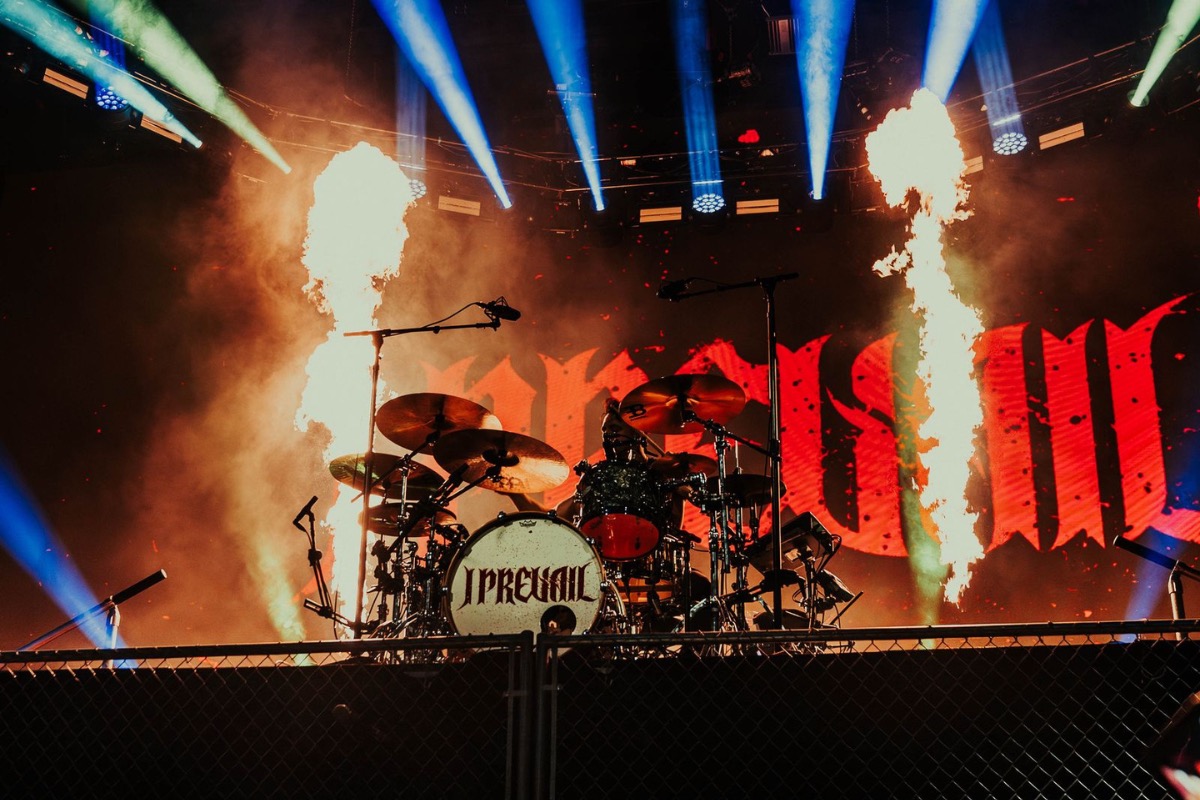
The acoustic drum kit is what most people picture when they hear the word "drums" — a collection of shells, cymbals, and hardware that lets one player control an entire rhythm section with both hands and both feet. It's the standard instrument in rock, pop, jazz, blues, country, metal, and most popular music worldwide.
A typical 5-piece kit includes a bass drum (played with a foot pedal), a snare drum, two rack toms, a floor tom, hi-hat cymbals, a ride cymbal, and one or more crash cymbals. The "5-piece" count refers only to the shells — cymbals and hardware are counted separately. Smaller jazz configurations (3- or 4-piece) strip it back to essentials; larger extended kits add more toms, cymbals, and sometimes a second bass drum for progressive and metal players.
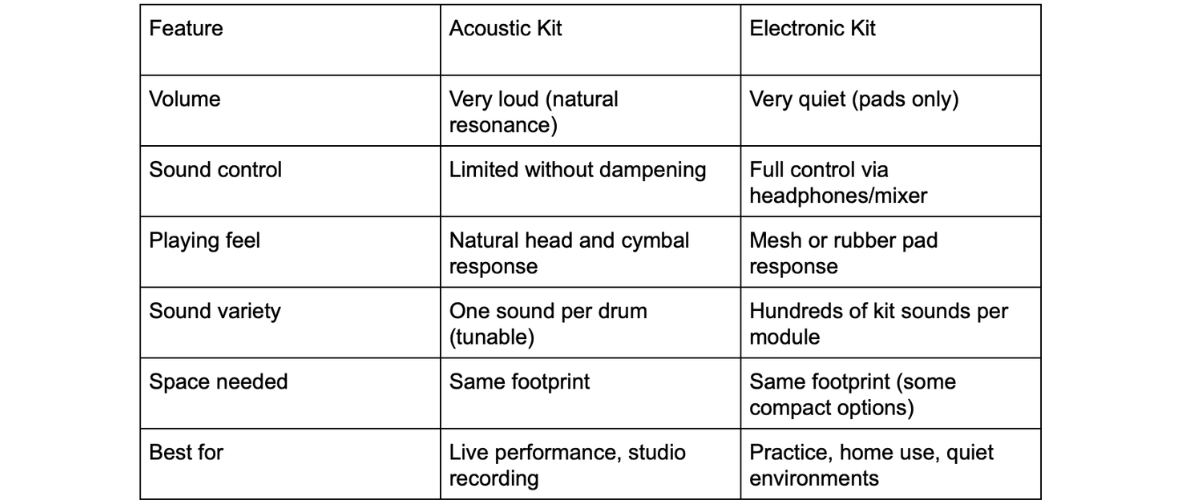
Acoustic kits are naturally loud. The shells and heads resonate without any amplification, which is exactly what you want on a stage but can be a real problem in a bedroom or apartment. If volume is a concern, an electronic kit or practice pads are worth considering alongside or instead of an acoustic setup. For a full breakdown of every component and how it all fits together, our complete guide to drum set parts covers each piece in detail.
Individual Acoustic Drums
The drums that make up a kit each have long histories as standalone instruments. Understanding what each one does on its own helps you understand why the kit sounds the way it does — and why each piece is positioned where it is.
Snare Drum
The snare drum is the most recognizable individual drum in popular music. It gets its distinctive crack from metal wires — called snares — stretched across the bottom head. When you strike the top head, those wires buzz against the underside, creating that sharp, cutting snap. Without the snares, it would just be a small, high-pitched tom. The snare drives the backbeat in rock and pop (beats 2 and 4), carries the rhythmic detail in marching band, and plays a central role in orchestral percussion. Getting the most out of yours starts with knowing how to tune it — our snare drum tuning guide walks through every step.
Bass Drum
The bass drum is the largest drum in most setups and produces the deep, low-frequency thud that anchors the rhythm. In a kit, it sits horizontally on the floor and is played with a beater pedal — the only drum you play with your foot rather than your hands. In marching ensembles and orchestras, it's played vertically with a large mallet and produces an even bigger, more resonant boom. Concert bass drums used in orchestral settings can reach 36" or more in diameter.
Tom-Toms
Toms are cylindrical drums without snares, producing a warm, rounded mid-range tone used primarily in drum fills — the transitions between sections of a song. In a kit they appear as rack toms (mounted above the bass drum) and a floor tom (standing on three legs to the drummer's right). The smaller the tom, the higher the pitch. Standalone toms also appear in orchestral settings, drum corps, and various world music traditions.
Electronic Drum Kits
Electronic drum kits use rubber or mesh pads in place of acoustic shells and heads. Striking a pad sends a signal to a sound module (sometimes called the "brain"), which plays back a digital drum sample through speakers or headphones. The physical layout mirrors an acoustic kit exactly — bass pedal, snare position, toms, hi-hat, ride, and crashes are all in the same places — so skills transfer directly between acoustic and electronic playing.
The biggest advantage of an electronic kit is volume control. You can practice at midnight through headphones without waking anyone up, which makes them ideal for apartments, shared houses, and bedroom setups. Modern mesh-head kits from Roland, Alesis, and Yamaha have improved significantly in feel and responsiveness — high-end models are nearly indistinguishable from an acoustic kit in terms of rebound and dynamics. The trade-off is cost: a good electronic kit that genuinely feels like playing acoustic costs more than an equivalent beginner acoustic setup.
Hand Drums
Hand drums are struck with the palms, fingers, or knuckles rather than sticks or mallets. They're found in almost every musical tradition on earth and produce a wide range of tones depending on where and how your hand makes contact with the head. Most hand drums are played in the lap or between the knees, though some (like the conga) are typically mounted on a stand for performance.
Djembe
The djembe is a goblet-shaped drum from West Africa, traditionally carved from a single piece of wood with an animal-skin head. It produces three distinct sounds: the bass (struck in the center with a flat palm), the tone (struck near the edge with the full hand), and the slap (struck at the rim's edge with a cupped hand for a sharp, high-pitched crack). It's one of the most widely played hand drums in the world today — popular in drum circles, world music, and community settings. For beginners drawn to hand drumming rather than kit playing, the djembe is usually the most accessible starting point.
Conga
Congas are tall, narrow barrel-shaped drums originating in Cuba, typically played in pairs or sets of three. Each drum is tuned to a different pitch — quinto (highest), conga or tres dos (mid), and tumbadora (lowest). Players produce open tones, muted tones, slaps, and bass tones through different hand positions against the head. Congas are central to Afro-Cuban music, Latin jazz, and salsa, and appear regularly in popular music production.
Bongo
Bongos are a connected pair of small drums — one slightly larger than the other — traditionally held between the knees and played with fingers and palms. The smaller drum (macho) and larger drum (hembra) are tuned to different pitches. They're among the most approachable hand drums for beginners because of their compact size and relatively intuitive technique, and they appear in Afro-Cuban music, jazz, and a wide range of popular music styles.
Cajon
The cajon (pronounced "ka-HON") is a box-shaped drum from Peru — literally a wooden crate that became an instrument. The player sits on top and strikes the front face (the tapa) with their hands. The upper portion of the tapa produces a bright snare-like crack (thanks to internal snare wires in most modern cajons); striking lower and in the center gives a deep bass tone. The cajon has exploded in popularity as a quiet, portable alternative to a full drum kit — common in flamenco, acoustic performances, and any setting where a full kit would be too loud or impractical.
Tabla
The tabla is a pair of hand drums from North India — a small, high-pitched drum (the dayan, played with the right hand) and a larger bass drum (the bayan, played with the left). They're central to classical North Indian music and are renowned for their extraordinary tonal range and technical complexity. The black paste (syahi) applied to the center of each head shapes the harmonic overtones and is a defining feature of tabla construction and sound.
Frame Drums
Frame drums have a shallow body — essentially just a circular frame — with a head stretched across one or both sides. They're among the oldest percussion instruments ever documented, appearing in ancient Mesopotamia, Egypt, and Greece. The category spans everything from simple hand-held drums to technically complex instruments played with precise finger rolls.
Tambourine
The tambourine is a small frame drum fitted with pairs of metal jingles (called zils) around the rim. It can be shaken, struck, or rubbed — each technique producing a different sound. The tambourine appears in classical orchestration, gospel music, folk traditions, and popular music around the world. In a rock or pop context, a tambourine shaken on the backbeat adds shimmer and rhythmic drive sitting just above the snare and hi-hat.
Bodhran
The bodhran (pronounced "BOW-ran") is a circular frame drum central to Irish traditional music, played with a double-headed beater called a tipper. The player holds the drum vertically and controls the tone and pitch by pressing the free hand against the inside of the head while striking the outside. It drives the rhythm beneath fiddles, uilleann pipes, and tin whistles, and has a warm, earthy tone that's unlike any other percussion instrument in popular use.
Riq
The riq is a small tambourine-style frame drum from the Arab world, with a thin goat-skin head and paired brass cymbals around the frame. It's played with highly refined finger technique and is considered one of the most technically demanding frame drums. The riq is central to classical Arabic and Middle Eastern music and can produce an astonishing variety of tones and ornaments in the hands of an experienced player.
Orchestral and Concert Drums
Orchestral percussion covers the drums used in classical music — symphony orchestras, concert bands, and marching ensembles. These instruments are purpose-built for the tonal and dynamic requirements of composed music, where precision, projection, and often specific pitch are essential.
Timpani
Timpani (also called kettledrums) are large, bowl-shaped drums — the only drums in standard orchestral use that are tuned to specific pitches. Each timpani has a pedal mechanism that changes head tension to hit a target note, and a full timpani section typically covers a range of several pitches. They're played with mallets that range from soft felt to hard wood, producing very different tone qualities at each hardness level. The timpani's deep, resonant boom is one of the most dramatic sounds in orchestral music, often deployed at climactic moments to add weight and intensity.
Concert Bass Drum
The concert bass drum is a large, two-headed drum mounted vertically on a stand and struck with a padded mallet. Unlike the kick drum in a kit, it's not played with a foot pedal — a standing percussionist strikes it with a single beater, producing a deep, sustained boom that carries through the entire orchestra. Marching bass drums are a variation played while being carried, and in drum corps they appear in sets of multiple drums tuned to different pitches, creating melodic bass lines.
Orchestral Snare
The orchestral snare drum is deeper and more projecting than a standard kit snare. It's used for notated rhythmic figures in classical compositions — everything from delicate rolls to sharp, accented hits — and demands a high level of technical control and stick precision. Marching snare drums take this further: built for outdoor projection and durability, often using Kevlar heads and carbon fiber shells that can cut through a crowd of thousands without amplification.
World Percussion
Beyond the categories above, drum traditions from across the globe produce instruments that don't fit neatly into any single western classification.
The taiko refers to a family of large Japanese drums used in ceremony, theatrical performance, and contemporary ensemble music. Taiko drumming (kumi-daiko) is a full-body practice combining drumming with precise choreography, and has developed a significant international following as a performance art form. The dhol is a double-headed barrel drum from South Asia, played with two sticks of different weights — one for bass, one for treble — and central to bhangra, wedding music, and folk traditions across Pakistan, India, and the broader South Asian diaspora. The surdo is a large bass drum at the heart of Brazilian samba, carried by players in carnival processions and samba schools and providing the deep rhythmic pulse beneath the entire ensemble. The udu is a clay drum from Nigeria, played by striking the opening of the pot with the palm — producing a distinctive, hollow "thud" found in West African and contemporary world music.
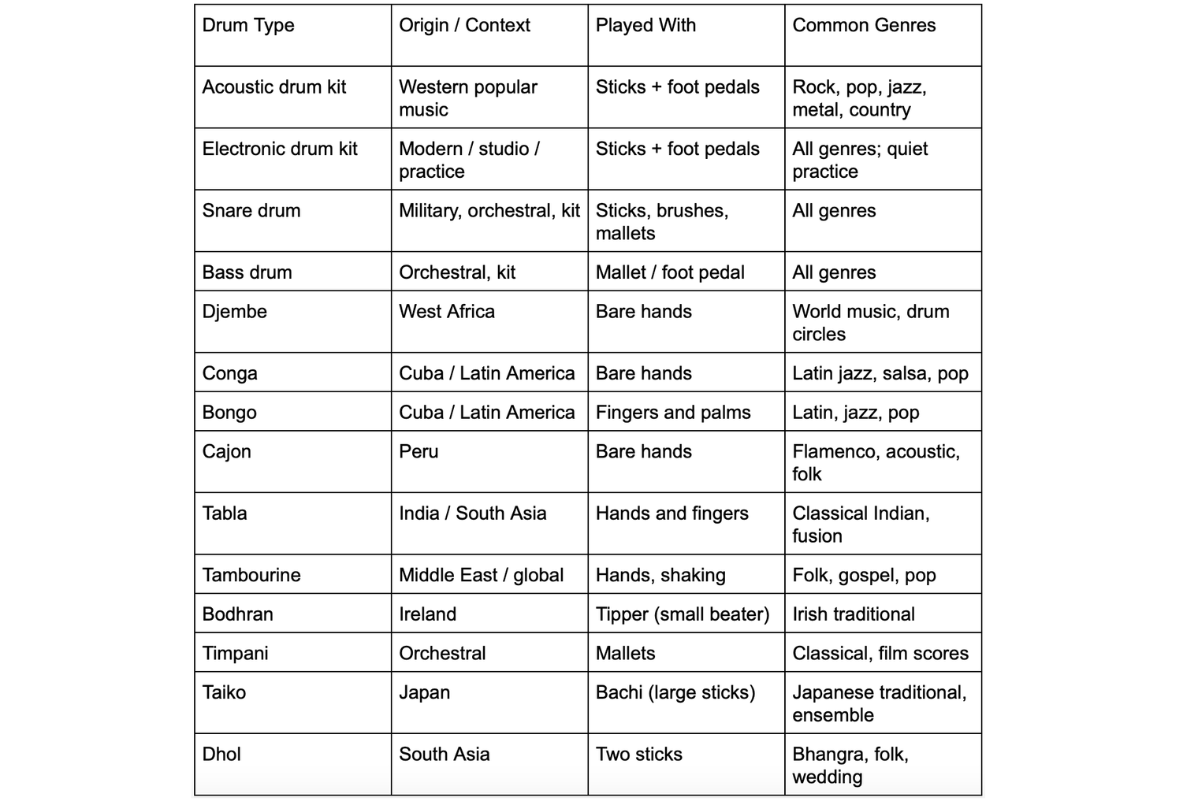
All Types at a Glance
Common Mistakes When Choosing a Drum Type
Choosing the wrong drum type for your situation is one of the most common — and most frustrating — mistakes beginners make. Here's what to watch for before you spend any money.
Buying an Acoustic Kit Without Considering Your Space
Why it's wrong: An acoustic drum kit is genuinely loud — consistently above 90 dB, comparable to a power tool. If you live in a flat, a semi-detached house, or anywhere with shared walls, an acoustic kit will create serious problems with neighbours almost immediately. Many beginners buy acoustic kits because they look and feel "real," then barely play them because of noise complaints.
How to fix it: Before buying, be honest about your space. If volume is a real constraint, an electronic kit with a mesh-head snare is the better starting point — you'll actually practice on it. If you're set on acoustic, look into riser pads, dampening materials, and rehearsal spaces before committing.
Choosing a Hand Drum Based on Looks Alone
Why it's wrong: Hand drums vary enormously in feel, tone, and playability between individual instruments — even within the same model and price range. A djembe that looks beautiful might have a head that's too tight, too loose, or unevenly tensioned, making it difficult to produce the three core tones cleanly. Buying based on aesthetics alone often leads to frustration in the first practice session.
How to fix it: If at all possible, play the drum before buying it. Listen for a clear, resonant bass tone in the center and a sharp, distinct slap at the edge. If you're buying online, stick to reputable drum-specific retailers and read reviews from other players — not just general music store ratings.
Assuming All Drums Require the Same Technique
Why it's wrong: The skills from playing a drum kit don't transfer automatically to hand drums, and vice versa. A kit drummer sitting down at a djembe for the first time will often grip the drum with too much tension and strike too hard — missing the open resonance that makes hand drums sound good. Technique on every drum type is specific to that instrument.
How to fix it: Treat each drum type as its own instrument. If you're moving from kit to hand drumming — or the other way around — take some time to learn the fundamentals specific to your new instrument rather than assuming what worked before will work here. The same goes for grip: how you hold your sticks on a kit is completely different from how you position your hands on a djembe or cajon.
Underestimating the Cajon for "Serious" Playing
Why it's wrong: The cajon looks like a box, sounds simple, and is often dismissed as a toy or a compromise. In reality, it's a nuanced instrument with a significant technique ceiling — professional cajon players produce ghost notes, cross-rhythms, and dynamic shading that rival any kit player in terms of subtlety and skill. Beginners often overlook it entirely in favour of a more "impressive-looking" instrument, missing out on what might actually be the perfect fit for the music they want to play.
How to fix it: If you play acoustic music, folk, flamenco, or any genre where a full kit would overpower the other instruments, give the cajon a serious look. It's portable, quiet enough to practice at home, and has a much lower barrier to entry than most drum types. Don't dismiss it based on appearance.

Which Type Should You Learn?
There's no universally correct answer, but there are clear patterns based on what you want to do with it:
- You want to play in a band: Start with the acoustic drum kit, or an electronic kit if volume is a real constraint. Every rock, pop, jazz, and country band expects a kit player. Our beginner's guide to learning drums covers where to start.
- You live in an apartment or need quiet practice: Electronic drum kit, full stop. Mesh-head kits from Roland and Yamaha are genuinely good instruments — not just compromises. Practice through headphones and nobody needs to know.
- You're drawn to world music or community drumming: The djembe is the most widely available and easiest to start with. Large djembe circles exist in most cities, which means built-in community and free informal instruction.
- You play acoustic or folk music: The cajon is worth serious consideration. Compact, quiet enough for flats, and produces both bass and snare sounds from a single instrument that fits in a hatchback.
- You're interested in classical music or formal study: Start with orchestral snare drum technique and drum notation. Our guide to reading drum notation is the right companion here.
- You just want to try something and see: A beginner djembe or cajon costs less than £100 / $100, requires no setup, and can be played in a living room without bothering anyone. They're an ideal low-commitment entry point before investing in a full kit.
Final Thoughts
The drum is universal. Every human culture in recorded history has developed some form of percussion — which tells you something fundamental about rhythm and what it means to us as people. The diversity of drum types isn't fragmentation; it's the same core impulse expressed across thousands of years and dozens of traditions.
Whatever type you're drawn to, the most important thing is picking one up and actually playing it. Reading about the difference between a djembe bass tone and a cajon slap is useful context — hearing and feeling the difference for yourself is where it actually becomes real. Start with what connects you to the music you love, and let the rest follow from there.
If the acoustic kit is your destination, your next step is understanding your first beginner drum beats — the rhythmic foundation everything else is built on.
FAQ
What are the main types of drums?
The main categories are the acoustic drum kit, electronic drum kits, hand drums (djembe, conga, bongo, cajon, tabla), frame drums (tambourine, bodhran, riq), and orchestral percussion (timpani, concert bass drum, orchestral snare). Within each category there are dozens of regional and cultural variations across the world's musical traditions.
What is the most popular type of drum?
The acoustic drum kit is the most commonly played drum instrument in popular music worldwide. As an individual drum, the snare is arguably the most versatile — appearing in drum kits, marching ensembles, orchestras, and studio recordings across virtually every genre.
What type of drum is easiest to learn?
The bongo and cajon are among the easiest to get satisfying sounds from in a first session. The djembe is similarly approachable. For kit drumming, a basic 4/4 rock beat on an acoustic or electronic kit can be learned in a few hours with good instruction — our beginner beats lesson is a good starting point.
What is the difference between a drum kit and a drum set?
There's no meaningful difference — the terms are used interchangeably. "Drum kit" is more common in British English; "drum set" is more common in American English.
Are electronic drums the same type as acoustic drums?
They share the same layout and playing technique, but they're a distinct instrument type. Acoustic drums produce sound through the physical resonance of shells and heads; electronic drums convert strikes on pads into digital audio. The skills transfer between them, but the feel and the physical experience are different.
What is the oldest type of drum?
Frame drums are among the oldest documented percussion instruments — examples appear in archaeological records from Mesopotamia and Egypt dating back over 5,000 years. Slit drums (carved wooden logs) are also among the oldest known forms, found across Africa, Asia, and the Americas.
How many types of drums are there?
There's no definitive number — musicologists classify percussion in different ways, and new hybrid instruments appear regularly. Dozens of distinct drum types are widely recognized across world music, with hundreds more regional variations if you count every cultural tradition globally.
What type of drum should a complete beginner start with?
It depends on your goals and situation. For playing in a band, an acoustic or electronic kit. For quiet home practice with no noise restrictions, an electronic kit. For world music and hand drumming, a djembe or cajon. The best starting point is whichever type connects directly to the music you actually want to play.