Conga drums are tall, single-headed hand drums played in pairs or sets of three, producing tones by striking different areas of the head with the fingers and palms. The combination of open tones, muted slaps, and bass tones gives congas a rhythmic range that no stick-played drum can match.
You've heard congas in salsa, Afro-Cuban jazz, funk, rock, and pop recordings more often than you probably realize — they're one of the most recorded hand drums in the world. Learning to play them is a fundamentally different experience from playing a kit, because everything is done with bare hands, and your tone comes directly from how and where you touch the head. That connection between hand and drum is what makes congas so expressive — and what makes early technique so important to get right.
In this guide, we'll break down what makes each conga tone, the different sizes and how they work together, how to position and seat yourself correctly, the core hand technique every beginner needs, common rhythmic patterns to start with, mistakes that hold beginners back, and what to look for when buying your first set. By the end, you'll have everything you need to start developing real conga vocabulary.
When you’re done reading, you will be familiar with:
- What Are Conga Drums?
- Parts of a Conga
- Conga Drum Sizes Explained
- The Four Core Conga Tones
- How to Play Conga Drums: Positioning and Technique
- Basic Conga Patterns to Start With
- How to Choose Your First Congas
- Common Conga Mistakes Beginners Make
- Beginner Tips for Building Conga Technique
- Final Thoughts
- FAQ
What Are Conga Drums?
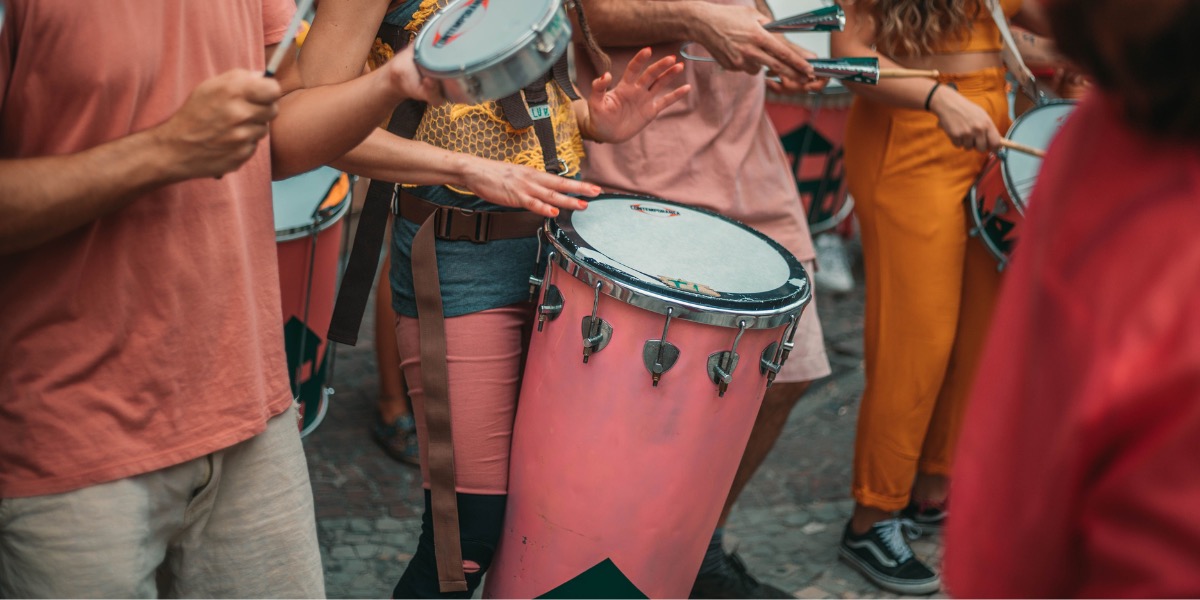
Congas are barrel-shaped, single-headed drums with West African roots that developed into their modern form through Afro-Cuban musical traditions in the early 20th century. The name "conga" likely comes from their association with the Congo region of Africa, carried to Cuba through the slave trade.
Unlike bongo drums — which are smaller, played seated between the knees, and produce a higher, drier sound — congas are larger, deeper-bodied drums that produce a rich, resonant tone across a wide pitch range. They're played in sets of two or three, each drum tuned to a different pitch, which lets a single player cover the low, mid, and high end of a hand-drum groove simultaneously.
Congas are central to Afro-Cuban music styles like son cubano, guaracha, and rumba, and from there spread into mambo, salsa, and Latin jazz in the 1940s and 50s. By the 1960s and 70s, they were everywhere in American pop and rock — you'll hear them on recordings by artists from Santana to the Rolling Stones to countless studio sessions. Today they're used in everything from orchestral percussion sections to electronic music productions as a sampled element.
What distinguishes congas from most other percussion instruments is that they're almost entirely about hand technique. There are no sticks, no beaters, no mechanical parts — just your hands, your fingers, and the drum head.
Parts of a Conga
Knowing the parts of your conga helps when tuning, replacing heads, or troubleshooting sound issues.
- Shell: The body of the drum, traditionally made from hardwood (like oak, ash, or African mahogany) or fiberglass. The shell shape influences resonance and projection. Wood shells are warmer; fiberglass tends to be brighter and more durable in humid conditions.
- Head (drumhead): The striking surface, traditionally made from animal skin (typically cowhide or buffalo hide), though synthetic heads are now common. The head stretches over the top opening of the shell.
- Bearing edge: The top rim of the shell where the head sits. The cut and quality of the bearing edge directly affect how the head vibrates and how the drum sounds.
- Counter hoop (rim): The metal ring that sits on top of the head and holds it in place. It's what your fingers strike when playing slap tones.
- Tension rods and lugs: Metal hardware that attaches the counter hoop to the shell. Tightening or loosening the tension rods raises or lowers the pitch of the head.
- Spur (foot): The metal base at the bottom of the drum that elevates it slightly off the floor and prevents sliding. Some congas have ball-type spurs; others have flat bases designed for stand mounting.
- Stand: Optional but useful. Adjustable stands let you position the drums at the right height and angle for standing or seated playing.
Conga Drum Sizes Explained
Congas come in three standard sizes, each with a distinct pitch range and role in the ensemble:

Most beginners start with a conga/tumba pair — the two most common sizes, giving you both the primary rhythm voice and a low bass tone. A set of three (adding the quinto) is the full configuration used by experienced conga players for salsa and Afro-Cuban styles, but two drums are plenty to start developing technique and patterns.
Head diameter differences between sizes are small — an inch or less — but the difference in pitch and feel is significant. The quinto is noticeably tighter and more staccato; the tumba booms with a round, deep resonance.
The Four Core Conga Tones
This is where conga playing diverges most dramatically from stick percussion. Rather than hitting one spot on the drum, conga players produce multiple distinct tones from the same head by changing their hand position, finger contact, and technique. Mastering all four is what separates a conga player from someone just slapping a drum.
Open Tone
The foundation of conga playing. Strike the head with the ring, middle, and index fingers (and sometimes pinky) landing on the edge of the head (not the center), then immediately rebound — let the fingers spring off the head so the tone can ring freely. The result should be a full, resonant, ringing tone. This is the most common sound in conga patterns and the one you'll spend the most time refining.
Common mistake: pressing into the head after striking, which kills the sustain. The rebound is everything.
Muted (Closed) Tone
Strike the same area as the open tone but keep the fingers on the head after the strike, dampening the vibration immediately. You get a dry, muted "thud" rather than a ring. This tone adds rhythmic texture and percussive drive to patterns without taking up tonal space.
Most patterns alternate open and muted tones — the open tone sings, the muted tone punctuates.
Bass Tone
Played in the center of the head with a slightly cupped hand — the whole palm makes contact and then immediately springs back, creating a deep, warm thud with a short sustain. The bass tone is your low-end anchor. It takes a relaxed, heavy hand contact to produce correctly; tensing up kills the depth of the sound.
Slap Tone
The most difficult tone to learn. Strike the edge of the head sharply with the ring finger and middle finger curled slightly, pulling a crisp, cracking sound from the drum's edge. The slap produces a bright, cutting, almost "popping" sound — the conga equivalent of a snare backbeat. A good slap tone is immediately recognizable. A bad one sounds like a muffled hit. It takes weeks to develop and is worth the investment of focused practice time.
How to Play Conga Drums: Positioning and Technique
1. Set Up Your Drum Position
Congas can be played seated or standing. Standing with drums on stands is the most common professional setup and is generally better for posture and energy on long sessions. For seated playing, the drums can be tilted slightly toward you on low stands or angled directly between your knees (older tradition).
The tops of the drums should be roughly at hip height when standing. You want to be able to reach the center of each drum comfortably without hunching forward or raising your elbows above shoulder height.
2. Position Your Hands on the Drum
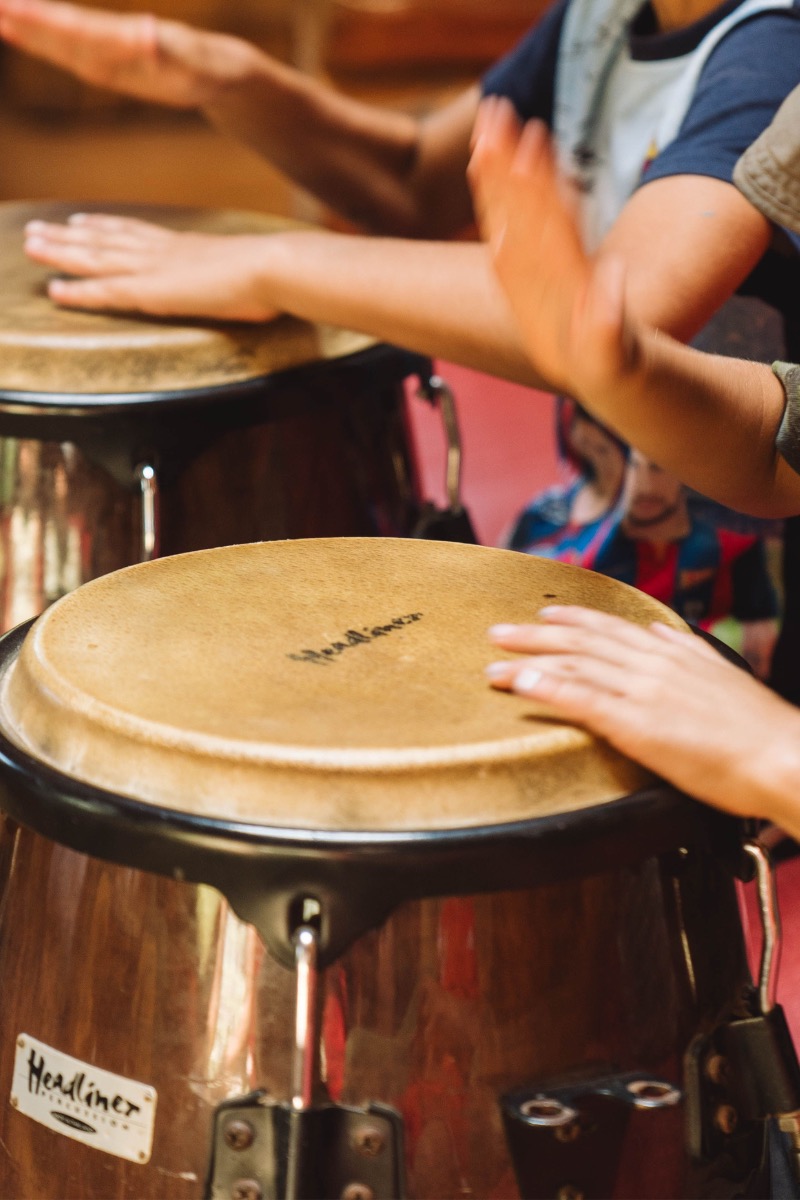
Your striking hand should approach the head with relaxed, slightly spread fingers — not stiff and not fully loose. The primary striking fingers (ring, middle, index) should make contact with the edge of the head first for open and slap tones, and the center of the head for bass tones.
Keep your wrists relaxed and let them be the fulcrum of your strokes. Like any hand percussion instrument, tension in the wrists and forearms is the enemy of both tone quality and endurance. If your forearms feel tight after a few minutes of practice, you're working too hard.
3. Alternate Hands Naturally
Most conga patterns alternate between hands — not necessarily in strict RLRL fashion, but with natural alternation based on the pattern. Right-handed players typically lead with the right hand on the higher-pitched drum (conga) and use the left hand for bass tones on the lower drum (tumba), though this varies by style and teacher.
Practice each hand independently before combining them. A pattern that sounds clean with both hands is almost always the result of each hand being solid on its own first.
4. Warm Up Slowly Before Playing Patterns
Hands on hard drum heads take time to warm up. Cold, stiff hands produce inconsistent tones and are more prone to soreness. Spend the first few minutes of any session just playing slow, relaxed open tones — nothing rhythmically complex, just getting the feeling of the drum under your hands.
Basic Conga Patterns to Start With
The most important pattern to learn first is the tumbao — the foundational Afro-Cuban conga groove that underlies salsa, son, and mambo. A simplified version uses just four tones in 4/4 time, with open tones on beats 2 and 4 and muted/bass tones filling in around them.
Here's a very simple starting framework (R = right hand, L = left hand, O = open tone, M = muted, B = bass):

The right hand on the higher drum handles the open/muted pattern; the left hand on the lower drum provides bass tones. Getting these two hands working together independently — especially at a steady tempo — is the central challenge of early conga learning.
Once the tumbao base feels comfortable, add the slap tone in place of some muted tones on beats 2 and 4 for more drive. That's when the pattern really starts to sound like what you've heard on Latin recordings.
Practice everything with a metronome, starting at 60–70 BPM. Conga patterns that feel sloppy at slow tempos will only get sloppier as you speed up.
How to Choose Your First Congas
Conga quality ranges from beginner kits under $200 to professional instruments that cost $800–$1,500 per drum. Here's what actually matters at the beginner level:
Shell Material
Hardwood shells (oak, ash, siam oak) produce the traditional warm, resonant conga tone. Fiberglass shells are more durable, weather-resistant, and often slightly brighter in tone — a common choice for outdoor use. At the beginner level, both work fine. Avoid shells made from low-quality plywood or MDF — they dampen resonance noticeably.
Head Type
Natural skin heads (cowhide or buffalo hide) give the most authentic conga tone — they're more responsive, warm-sounding, and nuanced. The trade-off is that they're sensitive to humidity and temperature changes and require more maintenance. Synthetic heads are more stable, more durable, and easier to care for. For beginners, synthetic heads are a practical starting point.
Hardware Quality
Check that tension rods tighten and loosen smoothly and that the counter hoop sits evenly around the head. Uneven hoop seating causes the head to have different tensions in different spots, which makes it very hard to tune properly and produces inconsistent tone depending on where you strike.
Starter Brands Worth Considering
LP (Latin Percussion) makes some of the most widely used beginner-to-professional congas. Their LP Aspire and LP Classics series are solid starter options. Meinl, Toca, and Pearl also produce reliable entry-level congas. Avoid no-name imports from unknown manufacturers at extremely low price points — poorly built congas with bad hardware and thin heads make learning significantly harder.
Stands vs. Floor Spurs
players start by sitting the drums on the floor using the built-in spur. That works perfectly fine for learning; stands become more useful once you're playing live or want a specific ergonomic setup.
Common Conga Mistakes Beginners Make
Playing Flat-Handed Instead of Finger-Striking
Why it's wrong: Slapping the head with a flat, stiff hand produces a dull, unfocused thud with no tonal definition. You lose the distinction between your open tone, muted tone, and bass tone — they all start to sound the same.
How to fix it: Focus on the edge of the head, not the center, for open tones. Your striking fingers should land just past the halfway point between the rim and center of the head. Finger contact should be slightly curved, not flat, so you're striking with the pads of your fingers rather than the full length.
Not Letting the Head Ring
Why it's wrong: Open tones require immediate hand rebound after striking — if you press into the head or leave your fingers resting on it after the hit, the sustain is killed and you lose the warm resonance that makes open tones sound good.
How to fix it: Think of the stroke as a bounce, not a press. Practice striking and consciously lifting your hand away immediately. The tone should sustain on its own for a moment after your hand is already gone.
Ignoring Tuning
Why it's wrong: Conga heads stretch and go out of tune with regular playing, especially newer heads or natural skin heads. A conga that's tuned unevenly — different tension at different points around the head — produces an inconsistent tone depending on where you strike it, making it impossible to develop accurate technique.
How to fix it: Tune your congas before every practice session. Loosen all tension rods, then tighten in a star pattern (opposite pairs simultaneously) in small increments until the pitch is even around the full circumference of the head. Tap near each lug to check — the same principle as tuning any drum. Knowing how to tune your drums properly pays off on congas just as much as on a standard kit.
Rushing the Slap Tone Before It's Ready
Why it's wrong: The slap tone is the most technique-dependent conga sound. Beginners who rush to incorporate it before they have the hand position right develop a muffled, clunky slap that doesn't ring out — and then struggle to un-learn that bad habit later.
How to fix it: Spend at least several weeks building your open, muted, and bass tones before introducing the slap. When you do start working on slaps, isolate just that stroke in slow practice — don't add it to a pattern until it sounds clean on its own.
Neglecting the Off-Hand
Why it's wrong: On congas, the non-dominant hand usually handles bass tones and lower-drum patterns. If it's underdeveloped, the bass line of your groove will be weak, inconsistent, and rushed — which makes everything else sound off even if your dominant hand is solid.
How to fix it: Practice bass tones with the non-dominant hand alone, at slow tempo. A deep, resonant bass tone from the left hand (for right-handed players) is the anchor of every conga pattern. If it's not solid, the groove won't lock.
Beginner Tips for Building Conga Technique
- Toughen your hands gradually. Playing congas produces calluses, especially on the striking fingers. Don't play until your hands are sore and blistered early on — keep sessions short (15–20 minutes) and increase gradually as your skin toughens up. Forcing it only sets you back.
- Use a metronome from day one. Conga patterns feel deceptively simple but are easy to rush or drag. A metronome at 60–80 BPM keeps your practice honest. Sloppy slow practice becomes sloppy fast playing — lock in the groove at slow tempo first.
- Listen to a lot of Afro-Cuban and Latin music. The patterns make much more sense once you've internalized how they feel in context. Recordings by Mongo Santamaría, Giovanni Hidalgo, Poncho Sanchez, and Changuito will give you a much better sense of what you're working toward than any written explanation.
- Work on one tone at a time. Spend full practice sessions on just the open tone, or just the bass tone, until each is consistent. Combined patterns are only as good as their individual components.
- Get a teacher if you can for the first month. Conga technique is much harder to learn correctly from videos alone than drum kit technique, because subtle hand positioning issues are hard to spot. Even a few lessons with an experienced hand percussionist can save you months of correcting bad habits.
- Play with other musicians when possible. Congas in context — even just playing along to recordings — develops your feel and musicality faster than isolated practice. The instrument is designed to be heard in a groove, not in isolation.
Final Thoughts
Conga drums reward patient, deliberate practice in a way that's immediately satisfying — each tone you develop is a real, distinct sound with its own character, and combining them into a groove that locks and swings is genuinely musical. The technique ceiling is high enough that you can spend years deepening your playing, but the entry point is accessible enough that you're making real music within a few weeks of dedicated practice.
Start with two drums and four tones. Master those, and the whole rhythmic world of Latin percussion opens up from there.
FAQ
What is the difference between congas and bongo drums?
Congas are larger, taller, single-headed drums played in sets of two or three. They produce deeper, more resonant tones and cover a wider pitch range. Bongo drums are smaller, traditionally played between the knees without stands, and produce a higher, drier sound. Both are Afro-Cuban in origin and often appear in the same musical settings, but they have distinct roles and different playing techniques.
Do I need two congas to start?
Technically no — you can learn basic hand technique on a single drum. But most conga patterns are designed for a pair, and the tonal relationship between the two drums (high/low) is fundamental to how the patterns work. A conga/tumba pair is the standard starting setup and the one most beginner instruction assumes.
How do I tune conga drums?
Tighten or loosen the tension rods evenly around the drum, working in opposing pairs (like a star pattern) rather than in a circle. Tap near each lug to check pitch consistency. The conga (mid-sized drum) is typically tuned to a clear, focused open tone — not too tight, not too slack. The tumba sits a few intervals below. Exact pitches are less important than getting the head even and resonant across the full surface.
Are congas hard to learn?
The basics are accessible — you can start producing the four core tones within a few weeks of practice. Getting them to sound truly clean, especially the slap tone, takes longer. Combining tones into fluid patterns while maintaining a steady groove is where most of the real work happens, and that develops over months. Compared to drum kit, congas have a faster initial learning curve but a similarly deep ceiling of technique.
Can I play congas without a stand?
Yes. Many players sit the drums on the floor using the built-in spur, or tilt them between their legs in a seated position. Stands add cost and setup time but offer better ergonomics and angle adjustability, especially for standing play. Start without stands if budget is a concern — you can always add them later.
What congas did famous musicians play?
Mongo Santamaría, the Cuban-American percussionist, is one of the most influential conga players in history and helped bring congas into jazz and R&B. Carlos "Patato" Valdés was a pioneer of Afro-Cuban conga technique. In rock, Coke Escovedo and Pete Escovedo brought congas into funk and pop. Airto Moreira introduced Brazilian hand percussion (including congas) to jazz fusion audiences through his work with Miles Davis and Chick Corea.