To play the bass drum, you press down on the kick pedal with your foot — either using your heel flat on the footboard (heel-down) for a softer, controlled stroke, or lifting your heel and striking with the ball of your foot (heel-up) for more power and speed. The beater swings into the batter head and you either let it bounce back naturally or hold it against the head to mute the sound, depending on the style you're going for.
That's the short version, but actually developing a reliable bass drum foot is where most beginners underestimate the work involved. Unlike your hands, which you've used your whole life to tap and grip, your foot hasn't been trained for this kind of rhythmic precision. On top of that, the bass drum has to work in tight sync with everything else you're playing — your snare, hi-hat, and cymbals — so a weak or inconsistent kick foot pulls apart the whole groove.
In this guide, we'll cover exactly how the bass drum works, how to set up your pedal correctly, the two main techniques (heel-down and heel-up) and when to use each, beginner-friendly patterns to build your kick foot, the most common bass drum mistakes and how to fix them, and practical tips to improve your kick foot faster. By the end, you'll have the foundation to play solid bass drum in any musical context — and know exactly what to practice to keep improving.
When you’re done reading, you will be familiar with:
- How the Bass Drum Works
- Setting Up Your Bass Drum Pedal
- The Two Main Bass Drum Techniques
- Foot Position and Posture
- Beginner Bass Drum Patterns
- How to Build Speed and Consistency
- Common Bass Drum Mistakes (and How to Fix Them)
- Beginner Tips for a Stronger Kick Foot
- Final Thoughts
- FAQ
How the Bass Drum Works
Before you start developing technique, it helps to understand what the bass drum actually is and why it behaves the way it does. The kick is the largest drum on your kit, and it sits on its side on the floor — you play it with your foot rather than your hands, which is what makes it feel so different from everything else on the kit when you're starting out.
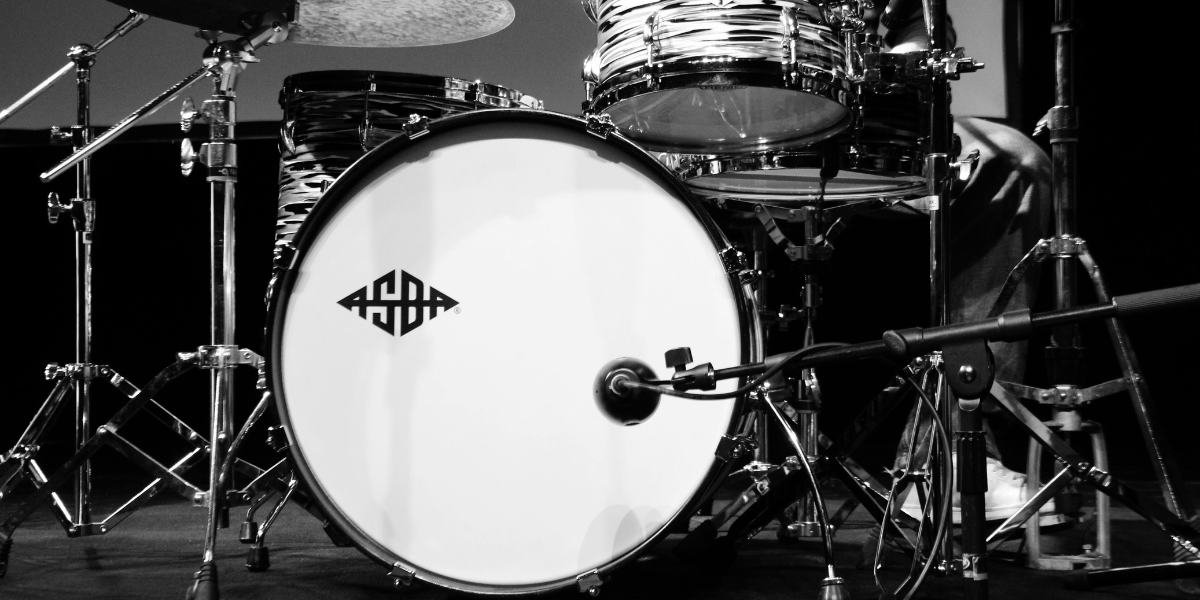
The drum has two heads: the batter head (the side the beater strikes) and the resonant head (the front-facing side, often with the band or logo on it). The beater is attached to the top of the pedal's drive mechanism — when you press the footboard down, the beater swings forward and hits the batter head. A spring pulls it back when you release pressure.
The tone the bass drum produces depends on several factors: how hard the beater hits, whether you let it bounce back or hold it in (called "burying the beater"), how tight or loose the heads are tuned, and whether there's any dampening inside the drum. A well-tuned bass drum with the right setup gives you a deep, punchy thump that sits at the foundation of every groove you play. Knowing how to tune your drums properly will make a significant difference in how your kick sounds.
Setting Up Your Bass Drum Pedal
Good bass drum technique starts with a properly set-up pedal. A pedal that's set up wrong for your foot will fight you, and no amount of practice will fully compensate for a poorly dialed-in setup. Here's what to check before you start playing:
Clamp the Pedal Securely to the Bass Drum Hoop
The pedal attaches to the front hoop of the bass drum via a clamp at the base of the pedal frame. Make sure it grips the hoop tightly — a loose pedal will creep forward during playing, which throws off your foot position and your timing. Once clamped, give it a firm shove to confirm it's not going anywhere.
Set the Beater Angle
Most pedals let you adjust the angle at which the beater rests before it strikes. As a starting point, set it so the beater head is sitting about 1–2 inches from the drum head when at rest (not pressing the pedal). This gives the beater enough distance to build momentum and hit with authority, without overswinging. If the beater rests nearly touching the head, your strokes will be weak. If it's angled too far back, you'll need to move your foot too far to get a sound.
Adjust the Spring Tension
The spring controls how quickly the beater rebounds after a stroke. Tighter spring = faster rebound, which helps with speed but requires more leg effort. Looser spring = slower, heavier rebound, which feels easier at first but can make fast patterns harder. Most beginners do well with a medium spring tension — tight enough to snap back cleanly, not so tight it feels like you're fighting it. Turn the spring tension knob or adjust the spring hook position depending on your pedal's design.
Footboard Height and Angle
Some pedals let you adjust the height of the footboard (the amount of "lift" it has off the floor) and the drive angle. Start with a neutral footboard position. If the footboard feels like it's too flat to the floor, raise it slightly. The goal is that when your foot sits comfortably on the footboard, there's a slight upward angle — like a gentle ramp — that makes it easy to rock forward into the stroke.
Beater Material
Beaters come with different striking surfaces: felt (softer, rounder tone), plastic (brighter, harder attack), and wood (sharp, defined hit). Most beginners start with a felt beater, which is forgiving and gives a warm, punchy sound that works across most styles. Save plastic or wood beaters for when you need a more pronounced attack for rock, metal, or recording situations.
The Two Main Bass Drum Techniques
There are two widely used approaches to playing the bass drum, and neither one is universally "correct" — they suit different styles, tempos, and physical preferences. Most experienced drummers are comfortable with both and switch between them depending on what a song needs.
Heel-Down Technique
In heel-down, your entire foot stays flat on the footboard — heel touching the board, toe pushing down to drive the beater. The motion comes from pivoting at the ankle, rocking your foot forward to strike and back to reset.
When to use it: Heel-down is ideal for quieter, more controlled playing — jazz, light pop, practice sessions on an acoustic kit where you want a softer tone. It gives you fine dynamic control and is generally gentler on your leg muscles for longer gigs or sessions.
The downside: Heel-down limits the force and speed you can generate. At faster tempos, the ankle pivot runs out of range before you can get the next stroke in cleanly.
Heel-Up Technique
In heel-up, you raise your heel off the footboard and strike using the ball of your foot and your leg/thigh muscles. Your weight is forward, foot angled down, and the power comes from pushing through the forefoot and driving your knee down.
When to use it: Heel-up is the go-to for rock, pop, metal, funk — anything that needs volume, definition, or speed. Most working drummers play heel-up for the majority of their playing.
The downside: It takes more leg endurance to sustain over long sets, and it can be harder to control dynamics at low volumes when you're just starting out.
Which Should You Learn First?
I'd recommend starting with heel-down to build ankle coordination and feel, then transitioning to heel-up as you get comfortable. Many teachers start students on heel-down specifically because it slows you down enough to focus on even stroke timing — which is the actual foundation. Once your timing is steady, the transition to heel-up happens quickly.
Foot Position and Posture
Where and how your foot sits on the pedal affects everything else — tone, control, and endurance. Get this right from the start and it'll save you from relearning bad habits later.
Where to Place Your Foot on the Footboard
For heel-down: rest your heel on the footboard with your toes at roughly a 45-degree angle, pointing slightly outward. Your foot should cover most of the footboard length.
For heel-up: the ball of your foot (just behind the toes) should sit roughly in the middle of the footboard. Too far toward the toe = less leverage and control. Too far back toward the heel = you lose the natural push-through motion.
Drum Throne Height and Leg Angle
Your seat height directly affects your bass drum technique. If your throne is too high, you'll be reaching down toward the pedal and your leg will be working at a poor angle. If it's too low, your knee will be cramped and you'll fatigue quickly.
A good starting point: sit on the throne and let your feet rest flat on the floor. Your thighs should be roughly parallel to the floor or angled very slightly downward toward your knees. From there, a natural pivot forward to the pedal should feel easy and comfortable — not strained. Your drum throne height and position matters more than most beginners realize; it affects not just kick technique but your whole-body posture at the kit.
Ankle Relaxation
Tension in your ankle and foot is the enemy of bass drum control. A locked, stiff ankle can't pivot smoothly and fatigues fast. Practice letting your foot feel heavy and relaxed on the footboard before you start playing. The strike should come from a deliberate, relaxed movement — not a tense stomp.
Beginner Bass Drum Patterns
Once your setup is sorted and you have a feel for the heel-down stroke, start with simple patterns that build kick timing alongside your hands. The goal here is coordination, not speed — slow and even beats your foot against your hands is the whole game at this stage.
Pattern 1: Quarter Notes (Beat 1 and 3)
This is the most fundamental bass drum pattern in popular music. Hit the kick on beats 1 and 3 of a four-beat bar while playing your hi-hat on every quarter note:
HH: x - x - x - x -
SD: - - - - - - - -
BD: x - - - x - - -
Beats: 1 + 2 + 3 + 4 +
This pattern underpins countless rock, pop, and country songs. Once it's solid, add the snare on 2 and 4 to complete the basic rock groove.
Pattern 2: Basic Rock Beat
Add the snare on beats 2 and 4:
HH: x - x - x - x -
SD: - - x - - - x -
BD: x - - - x - - -
This is the foundation of almost every rock and pop beat. It's the first full groove most drummers learn, and it's worth spending real time making it feel completely natural before adding complexity.
Pattern 3: Kick on Beat 1, the "and" of 2, and Beat 3
Move the kick to beat 1, the "and" of 2, and beat 3:
HH: x - x - x - x -
SD: - - x - - - x -
BD: x - - x x - - -
This adds syncopation and is a staple of funk and R&B drumming. The off-beat kick hit is where coordination starts to get challenging — go slow and count out loud to keep it locked.
Pattern 4: Four-on-the-Floor
Hit the kick drum on every quarter note (all four beats):
HH: x - x - x - x -
SD: - - x - - - x -
BD: x - x - x - x -
This is the backbone of disco, house, and dance music. It's rhythmically simple but physically demanding to sustain, which makes it an excellent endurance-builder for your kick foot.
How to Build Speed and Consistency
A reliable bass drum foot is built slowly. There's no shortcut to bypassing the stages — trying to play fast before you can play evenly just bakes inconsistency into your muscle memory.
Use a Metronome from Day One
Play every pattern with a metronome. Start slower than you think you need to — 60–70 BPM for four-on-the-floor, slower for more complex patterns. The metronome tells you the truth about your timing in a way that playing along to songs doesn't. Your kick should lock exactly with the click, not slightly ahead or behind it.
Isolate the Foot Alone
Practice kick patterns without your hands. Just sit at the kit and run quarter notes, eighth notes, and simple syncopated patterns with your foot while keeping your hands rested. Your foot doesn't get the same independent practice time that your hands do, so giving it dedicated solo time pays off fast.
Increase Tempo in Small Steps
Once a pattern feels controlled at a given tempo, bump the metronome up by 5 BPM. Play at the new speed until it feels the same as the previous one. This incremental approach is how you build speed without sacrificing control. Jumping straight to fast tempos is how you end up with a sloppy, inconsistent kick foot.
Practice Single-Stroke Alternation (for Double Bass)
If you eventually want to develop a double bass pedal or two-foot independence, start with alternating single strokes between your right and left foot now — even if you only have a single pedal, you can practice the left foot motion on the hi-hat pedal. That basic two-foot alternation is the root of all double bass technique.

Common Bass Drum Mistakes (and How to Fix Them)
Most bass drum problems come down to a small set of recurring habits. Catch these early and you'll develop much faster.
Burying the Beater
Why it's wrong: Pressing the beater into the head after you strike it chokes the drum's resonance. Instead of a full, open "thump," you get a dead, muffled thud. It also makes fast playing harder because the beater can't bounce back naturally for the next stroke.
How to fix it: Let the beater rebound off the head the moment it strikes — the same way a drum stick bounces off a snare. Practice single kicks at slow tempo, focusing on the beater snapping back cleanly after each hit. Use heel-down to start so the motion is small enough to control.
Tensing Up the Leg and Ankle
Why it's wrong: A tense leg locks up the natural spring of the ankle and fatigue sets in fast. You'll start missing notes, rushing, or playing inconsistently within minutes.
How to fix it: Consciously relax your foot and ankle before every practice session. Shake your foot loose like you're flicking water off it. During playing, check in periodically — if your leg feels tight, stop and reset. Relaxation is a skill you have to practice, not just something that happens.
Rushing the Kick
Why it's wrong: The bass drum defines the tempo alongside the hi-hat. If the kick rushes ahead of the beat, the whole groove sounds unstable. This is especially common on syncopated patterns, where beginners anticipate the off-beat hit and land it slightly early.
How to fix it: Slow down and use a metronome. Record yourself playing and listen back — rushing is much easier to hear on a recording than it is while you're playing. Count out loud as you play to anchor your internal sense of the beat.
Ignoring Dynamic Control
Why it's wrong: Hitting the kick at maximum force on every stroke sounds heavy-handed and tiring. Real bass drum playing has dynamics — ghost notes with the kick on off-beats, fuller hits on the primary beats. One-volume playing makes grooves sound robotic.
How to fix it: Practice the same pattern at three volume levels: soft, medium, and loud. Each level requires different foot pressure and control. Getting comfortable across the dynamic range will make your playing sound musical rather than mechanical.
Neglecting the Left Foot on the Hi-Hat Pedal
Why it's wrong: Most beginners ignore the left foot entirely and let it rest dead on the hi-hat pedal. But the left foot controls the hi-hat chick — a sharp, closed cymbal sound that's essential in jazz, funk, and any style where the hi-hat isn't fully open. Ignoring it leaves a valuable sound unused.
How to fix it: Start incorporating the hi-hat pedal into your practice. Play the hi-hat pedal on beats 2 and 4 while the right foot handles the kick pattern. It's challenging at first, but this four-limb independence is fundamental to drumming at any level.
Beginner Tips for a Stronger Kick Foot
- Play barefoot or in flat-soled shoes. Chunky soles reduce your feel for the footboard. Many drummers prefer thin-soled sneakers or play barefoot to maximize feedback from the pedal. Try both and see what gives you more control.
- Spend 5–10 minutes of every practice session on kick-only exercises. Run quarter notes, eighth notes, and simple syncopated patterns before you add your hands. Your foot needs dedicated attention to develop at the same pace as your hands.
- Record your playing and listen back. Your kick foot's timing issues are much easier to hear on a recording than they are in real time. Even a phone recording is enough — just play it back and listen specifically to whether the kick is locking with the beat or drifting.
- Check your pedal spring tension regularly. Springs can loosen or stiffen over time, especially with heavy use. If your kick suddenly feels sluggish or overly bouncy, the spring may need adjustment. A well-dialed pedal makes technique development much easier.
- Be patient with slow progress. Most drummers who started young had years of informal foot-tapping before they ever touched a kit, which gave their kick foot a head start. If you're coming to drums as an adult, your foot coordination catches up — it just takes longer. Consistency matters more than daily practice intensity.
- Learn bass drum patterns from real songs. Generic exercises are useful, but playing actual songs gives your kick foot musical context. Pick songs in styles you want to play — rock, funk, hip-hop — and slow them down to a manageable tempo. Your ability to read drum tabs makes this much easier, since you can find kick patterns for virtually any song online.
Final Thoughts
The bass drum is the rhythmic foundation your entire kit sits on. Getting it solid — consistent, in-time, and dynamic — is one of the most important things you can do as a developing drummer. The good news is that it doesn't require any special gear or advanced technique to make progress: a properly set-up pedal, a metronome, 10 minutes of dedicated foot practice per session, and genuine patience with the process will get you where you need to be.
Start with heel-down to build ankle awareness and timing, move to heel-up as you need more volume and speed, and always prioritize evenness over tempo. A kick foot that locks perfectly at 80 BPM is far more valuable than one that stumbles at 120. Work from the foundation up, and the speed will come naturally.
FAQ
What is the bass drum, and how is it different from other drums on the kit?
The bass drum (also called the kick drum) is the largest drum on a standard kit. Unlike all your other drums, you play it with your foot via a pedal rather than with sticks. It provides the low-end foundation of the groove and is typically heard as the "boom" in any beat.
Should I use heel-up or heel-down technique as a beginner?
Most teachers recommend starting with heel-down to develop ankle coordination and control, then transitioning to heel-up once your timing is solid. Heel-up is more powerful and is used by the majority of drummers for most styles of music.
How long does it take to develop a reliable kick foot?
For basic patterns (kick on 1 and 3, or a simple rock beat), most beginners feel comfortable within a few weeks of consistent practice. For complex syncopation and high-speed playing, expect to spend months building the coordination. The kick foot always takes longer to develop than hand technique, because it starts from a lower base of daily use.
Why does my bass drum sound muffled or dead?
Most likely you're burying the beater — pressing it into the head after striking instead of letting it bounce back. Try allowing the beater to rebound naturally after each stroke. Dead bass drum tone can also come from over-dampening inside the drum; some dampening is good, but stuffing the shell too full of foam or blankets kills all the resonance.
What size bass drum is best for beginners?
Most beginner drum kits come with a 20" or 22" bass drum, which is the standard for rock and pop. A 22" gives a slightly deeper, fuller tone; a 20" is a bit punchier and easier to transport. Either works well for learning. You don't need to think much about size until you're playing specific styles that benefit from smaller (18") or larger (24") kicks.
How do I stop my bass drum pedal from sliding on the floor?
A drum rug is the standard solution — it anchors the bass drum and pedal in place and prevents everything from creeping forward as you play. If the spur feet on the bass drum are digging into the rug and still slipping, tighten them down more firmly, or use a dedicated bass drum anchor strap that connects the pedal to the bass drum hoop.